- Daily Pnut
- Posts
- Trump's Trade War For Greenland
Trump's Trade War For Greenland
A Fatal Train Crash In Spain & Ads Come To ChatGPT

Marcus Gee-Lim
January 20, 2026

Hi readers, hope you enjoyed the long weekend! Today, we’re covering Trump’s push for Greenland, snap elections in Japan, a deadly train crash in Spain, turning the military on protestors, Elon Musk’s return to politics, and OpenAI’s push for profitability.

“Abandon yourself to your first impression. If you really have been touched, you will convey to others the sincerity of your emotion.” – Jean-Baptiste-Camille Corot

Going Gaga Over Greenland
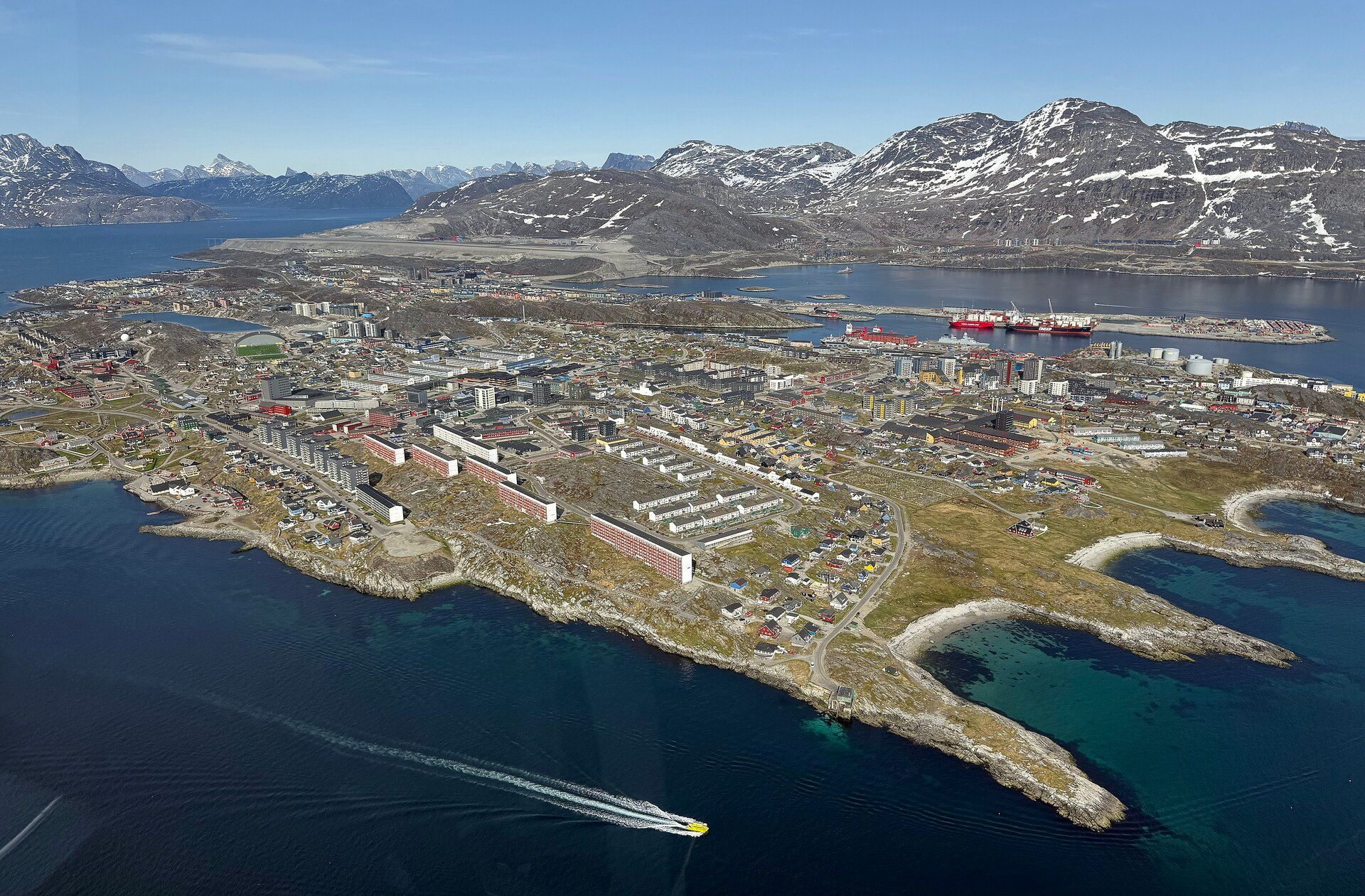
“Nuuk, Greenland skyline” by Quintin Soloviev. CC BY 4.0.
Trump’s quest for Greenland got even crazier over the weekend. On Saturday, the president announced that he plans to implement a 10% tariff “on any and all goods” brought into the U.S. from the U.K., France, Germany, Denmark, Norway, Sweden, the Netherlands, and Finland on February 1. That tariff rate, he threatened, will rise to 25% if Greenland isn’t sold to the U.S. by June 1 – and the import taxes will only be removed once a deal for the Danish territory is fully secured.
The next day, in a text message conversation with the leaders of Norway and Finland, Trump apparently told Norwegian Prime Minister Jonas Gahr Stoere that, “Considering your Country decided not to give me the Nobel Peace Prize for having stopped 8 Wars PLUS, I no longer feel an obligation to think purely of Peace,” adding, “Denmark cannot protect that land [Greenland] from Russia or China, and why do they have a ‘right of ownership’ anyway? There are no written documents, it's only that a boat landed there hundreds of years ago, but we had boats landing there, also.” In short, it appears that Trump is upset about not winning last year’s Nobel Peace Prize (despite Venezuelan opposition leader María Corina Machado giving her Nobel medal to him last week), and he doesn’t seem to care about international law in the slightest.
On Monday, the president doubled down on his threats. In an interview with NBC News, Trump was asked if he might use military force to seize Greenland. “No comment,” he replied. When asked if he planned to follow through on Saturday’s tariff threat, he responded, “I will, 100%.”
The U.S.’s allies in the E.U. and NATO are still scrambling to figure out a response to Trump’s aggression. E.U. leaders are expected to gather for an emergency meeting in Brussels on Thursday to figure out how to respond to Trump’s tariff threats, but NATO was never built to respond to a threat from within, especially from its most powerful member.
Meanwhile on Capitol Hill, lawmakers from both sides of the aisle are also trying to stop Trump from bringing NATO to a breaking point. Both parties have introduced bills that would block the U.S. from taking Greenland by force, but it’s not clear whether enough Republicans are willing to push back against Trump’s agenda to create the two-thirds majority needed to make the legislation veto-proof. Others have suggested legislation that would block the president’s tariffs on NATO allies, but similar bills designed to stop his “Liberation Day” tariffs failed to even pass the House last year.

What Is a Fee-Only Financial Planner?

Not sure what “fee-only” really means? For high-net-worth investors, how an advisor is compensated can matter as much as the advice itself.
Fee-only financial planners are paid directly by clients rather than through commissions. Learn how this model works, how it differs from other advisor structures, and the key considerations affluent investors often review before choosing a planner.

Takaichi Takes Her Chance
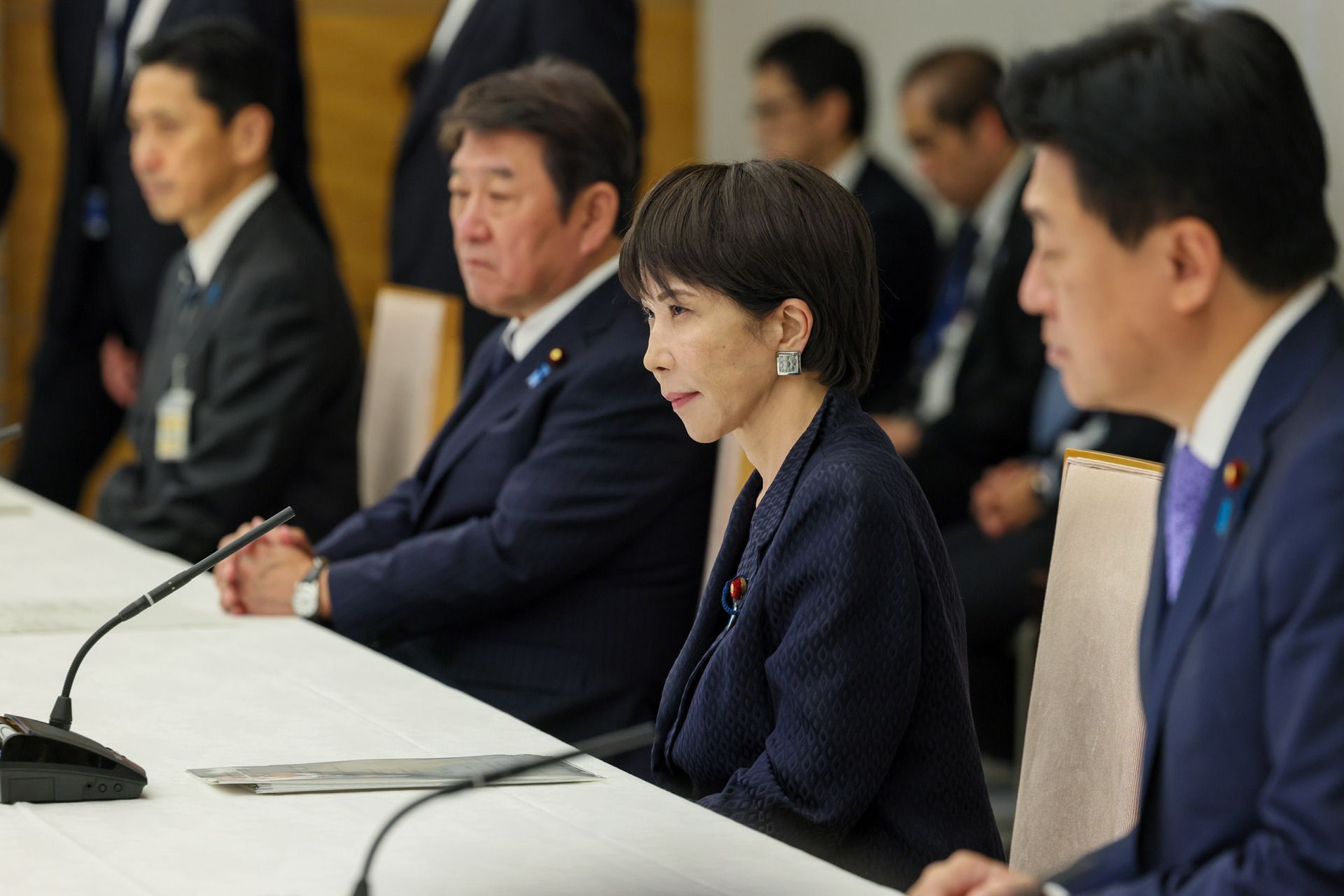
“Prime Minister Takaichi” via kantei.go.jp
Japanese Prime Minister Sanae Takaichi kicked off the week by calling for snap elections just three months into her term. Takaichi, the country’s first female prime minister, has enjoyed high (~70%) approval ratings since taking office thanks to a surge of right-wing populism in Japan, her focus on affordability, and her strong stance against China. She’s looking to leverage that popularity to help her Liberal Democratic party (LDP) regain some seats in Japan’s legislature after a string of rough elections saw the party lose its majorities in both the upper and lower houses of parliament.
“I am putting my future as prime minister on the line. I want the people to decide directly whether they can entrust the management of the country to me,” Takaichi told the press after announcing her plan to dissolve Japan’s powerful lower house of parliament on January 23, forcing an election on February 3. A solid victory in the election would shield the LDP from its current reliance on coalition partners, allowing Takaichi’s government to enact some of her more controversial policies, including one bill that restricts land acquisition by foreigners and another that establishes a ‘National Intelligence Agency.’
A Deadly Crash In Córdoba
On Sunday night in southern Spain, a high-speed train derailed in the middle of a straightaway on its journey from Málaga to Madrid, colliding with an oncoming train. At time of writing, officials say that at least 39 people were killed in the crash. The two trains were carrying a total of roughly 500 passengers at the time of the incident – 122 people were treated for their injuries, 48 are currently still in the hospital, and 12 remain in intensive care units.
According to Spanish transport minister Óscar Puente, the deadly accident was “really strange.” That’s because, on paper, nothing about the trains or tracks involved in the crash sticks out as hazardous. Both trains were traveling well within their speed limits, derailments rarely occur on straight stretches of track, the tracks were recently renovated in May, and the train that flew off the rails was just a few years old. Authorities are still rescuing people and removing bodies from the crash site, and Spain’s government has promised to conduct a thorough investigation into how the derailment occurred.
Additional World News
Trump administration demands Britain adopt US standards in trade talks (Politico)
Sheinbaum reassures Mexico after US military movements spark concern (AP)
South Korea's ex-president Yoon given 5-year jail term in first ruling over martial law (Reuters)
Trump charges $1bn for permanent seat on Gaza ‘Board of Peace’, invites Russia’s Putin (France24)
The 2026 Olympics are the most widespread in history. See what's happening where (NPR)

“Wait, Where Are We Deploying Sir?”
On Sunday, the Pentagon ordered roughly 1,500 active duty soldiers in Alaska to prepare for possible deployment in Minnesota, where the Trump administration is looking to crack down on local protests against ICE agent Johnathan Ross’ killing of Renee Good. The two battalions that have been called up are part of the 11th Airborne Division – the soldiers are not actually trained for the crowd control situations they’d likely encounter in Minnesota, though they are trained for the cold weather conditions that the state sees during the winter.
The troops haven’t been ordered to deploy to Minnesota yet, but the fact that they were even asked to prepare for deployment signals that the Trump White House is considering harsher crackdowns on anti-ICE protests. Trump has publicly threatened to invoke the Insurrection Act (which allows him to sic the U.S. Armed Forces on U.S. citizens to stop “civil disorder”) to suppress the demonstrations, though on Friday he stated that there’s no reason to go that far “right now.”
Musk Makes His Move
Last January, Elon Musk was at the top of the world. After spending hundreds of millions of dollars to get Trump back into the White House, Musk was put in charge of the so-called Department of Government Efficiency, which he planned to use to slash the scope of the federal government. But just a few months later, the Tesla billionaire was kicked out onto Pennsylvania Avenue in the wake of a massive public fallout between himself and the president he’d help push into office.
Since then, Musk has seemingly avoided the world of politics, instead investing more of his time to lead X and Tesla. But reporting from the New York Times and Axios has revealed that the billionaire is taking another swing at king-making. According to both outlets, Musk recently made a $10 million donation to the campaign of Nate Morris, a businessman making a push to succeed Senator Mitch McConnell.
The Republican primary for the Kentucky Senate seat is expected to be hotly contested, and Morris will have to compete with established politicians including Representative Andy Barr and former state attorney general Daniel Cameron. Morris has positioned himself as an anti-establishment Republican, claiming that both of his main competitors will just be McConnell-lites if they take office.
Additional USA News
Trump Administration Orders USDA Employees to Investigate Foreign Researchers They Work With (ProPublica)
‘The struggle continues’: MLK Day celebrated amid tense political climate (Guardian)
Dems' divide over Harris surfaces as she looks like a 2028 contender (Axios)
FBI opened probe on Minneapolis shooting; none exists now, Justice says (WaPo, $)
'60 Minutes' airs report on Trump deportations that was suddenly pulled a month ago (AP)
There’s a ‘top-secret’ project beneath the White House East Wing. CNN has the details on what’s inside (CNN) (try disabling JavaScript)


Slopmaker Seeking Sponsors
On Friday, OpenAI announced that it plans to start showing ads to ChatGPT users as the company looks for ways to become profitable. In a blog post, the AI firm stated that it plans to roll out ads in the free version of ChatGPT as well as in ChatGPT Go, a new subscription tier that costs $8 per month.
According to OpenAI, ChatGPT ads will look something like this. The company has promised that the ads won’t affect how the chatbot responds to user queries, though they will be informed by users’ current and past “conversations” with the chatbot. Users with Pro, Business, and Enterprise subscriptions won’t be shown ads at all, and the company will offer the option to turn off ad personalization.
The move is part of OpenAI’s attempt to become a publicly traded company. Before it starts selling stock, the AI firm needs to show the market that it’s operating a profitable business. According to one source, OpenAI made $13 billion in revenue last year and expects to triple that number in 2026, but that cash flow is far from inspiring when you take into account the company’s future financial obligations. Currently, OpenAI has committed to spending more than $1.4 trillion (with a T!) on data center infrastructure projects over the next eight years. The company based that massive expenditure on the idea that it will be raking in hundreds of billions of dollars annually by 2030, but with Google’s Gemini and Anthropic’s Claude increasingly outperforming ChatGPT, it’s not clear that OpenAI will ever actually turn a profit.
Additional Reads
Editor + Writer: Marcus Gee-Lim
Designer: Joe Stella
Peanut For Your Thoughts
This site lets you input three bands/musical artists you enjoy and will recommend others you might like. It’s actually pretty good :)