- Daily Pnut
- Posts
- This Is Why Oil Prices Are Going Crazy
This Is Why Oil Prices Are Going Crazy
The U.S.'s Air Defense Issues & Trump Officials Flee For Their Safehouses

Marcus Gee-Lim
March 12, 2026

Hi readers, happy Thursday! Today we’re covering what’s going on with oil prices, South Korea losing its air defenses, a failed suit for the U.K. government, the Trump admin fleeing for safehouses, trust in the electoral process, and the problem with snow disposal.
Thank you for reading and please feel free to send any comments or feedback to [email protected]!

“It is so shocking to find out how many people do not believe that they can learn, and how many more believe learning to be difficult.” ― Frank Herbert, Dune

Oil Prices Take A Wild Ride
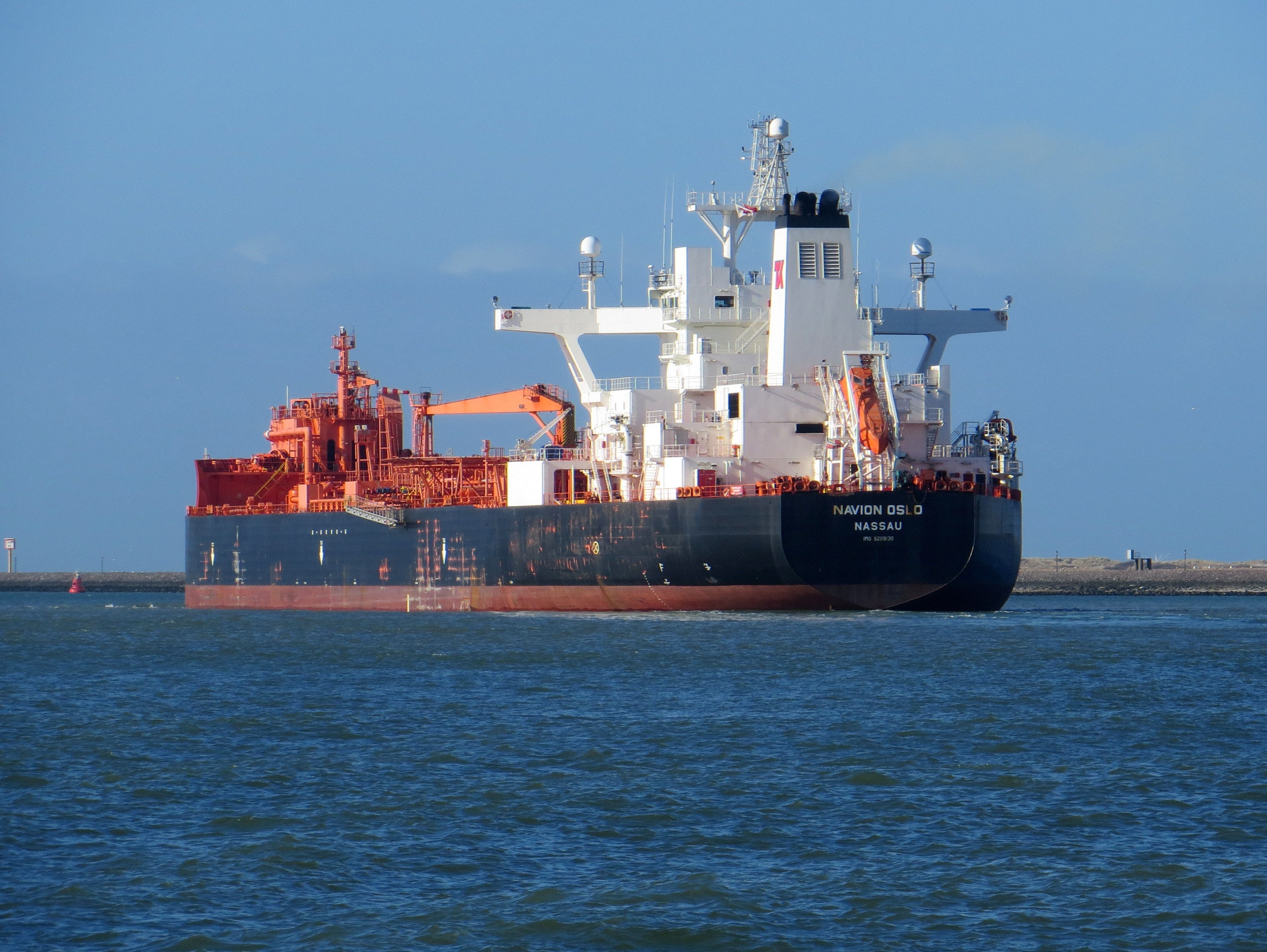
“Crude oil tanker Navion Oslo” by Roel Hemkes. CC BY 2.0
Think you’ve had a crazy month? Go talk to a barrel of oil and you might appreciate all the stability you’ve got in your life. Over the past two weeks, the price of a barrel of oil has been on a wild rollercoaster ride as the war in Iran has destabilized global markets.
Before Israel and the U.S. launched their joint war against Iran on February 28, the price of a barrel of oil stood at $70. After the war began, that price understandably rose as the conflict was projected to destabilize the Middle East, where much of the world’s oil comes from. Iran also threatened to close the Strait of Hormuz, the oil industry’s most important shipping artery, further driving up prices. Despite the Trump administration’s promises that the war would end soon, those prices continued to rise, briefly peaking at $119.50 a barrel on Monday, March 8 – that high point marked the first time that oil prices broke $100 per barrel in over four years.
But on Tuesday, oil prices took a U-turn, dropping back down below the $100 line. That drop was in part because of a since-deleted tweet from Energy Secretary Chris Wright. “The U.S. Navy successfully escorted an oil tanker through the Strait of Hormuz to ensure oil remains flowing to global markets,” Wright wrote in the post, which was deleted within minutes as no ship was escorted through the strait. According to the Wall Street Journal, the dip caused by his tweet erased $84 million in value from an exchange-traded fund linked to the price of oil.
Since then, prices have continued to fluctuate as headlines keep markets confused. Yesterday, the International Energy Agency (IEA) announced that it would be releasing 400 million barrels of oil worldwide in order to counteract supply disruptions caused by the war. The U.S. will contribute 172 million barrels to that total by tapping its strategic petroleum reserve – unfortunately, all those barrels are just a stopgap solution, as the Strait of Hormuz normally sees 20 million barrels shipped through its waters on a normal day.
As the weekend approaches, though, oil prices are headed back up. Midday on Wednesday, three ships in and around the Strait of Hormuz were struck, presumably by Iran. One of the ships caught on fire after being struck, while the others were just lightly damaged, but the attacks are a reminder that the strait is effectively closed for business. “Get ready for oil to be $200 a barrel, because the oil price depends on regional security, which you have destabilised,” said a spokesperson for Iran’s military. Oh, and have we mentioned that Iran is also placing mines around the area to further damage the oil trade?

Seoul Gets Stripped For Parts
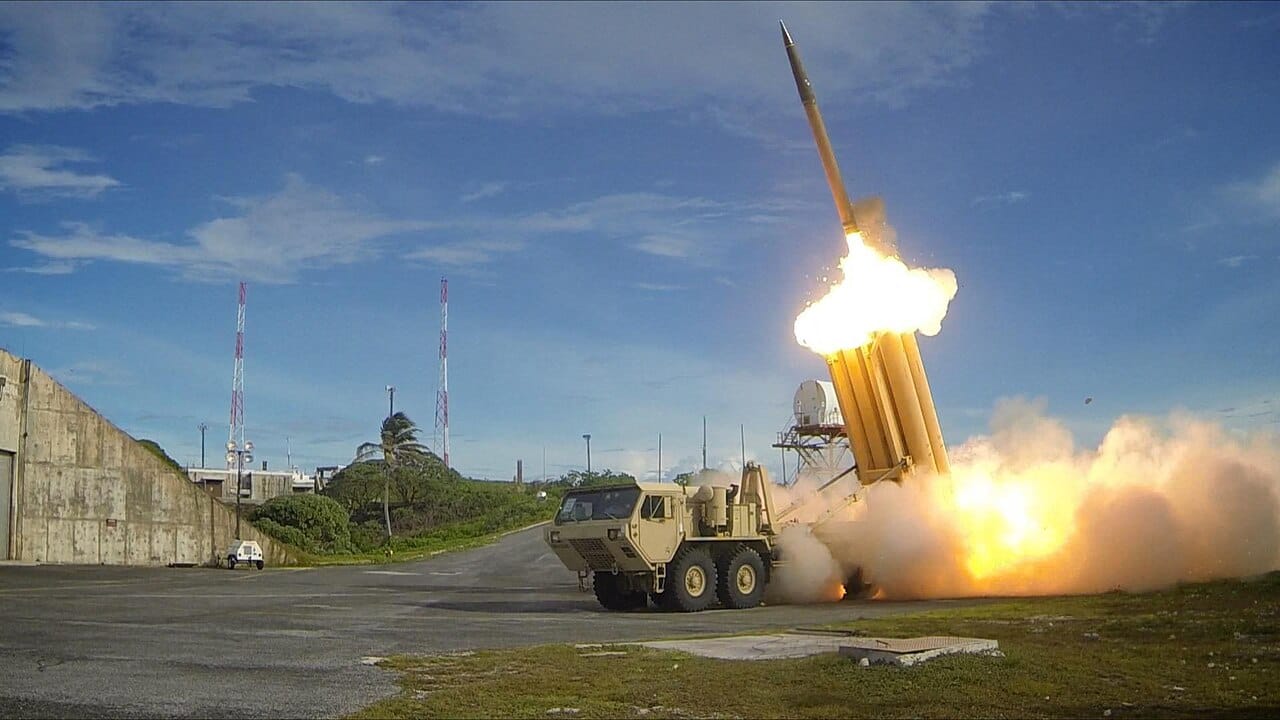
by Ralph Scott/Missile Defense Agency/U.S. Department of Defense
We wrote about this when the U.S.-Iran war initially broke out, but we definitely didn’t expect it to actually happen this soon. On Tuesday, the Washington Post reported that the U.S. was already moving parts of its terminal high-altitude area defense (THAAD) systems out of South Korea and into the Middle East. The THAAD systems were placed in South Korea less than a decade ago as part of U.S. efforts to expand its control over the airspace near North Korea and China, two of its biggest adversaries in the Pacific region. Meanwhile, two U.S. guided-missile destroyers which normally operate out of the U.S. Navy base in Yokosuka, Japan have also been relocated to the Middle East.
What do all these movements mean? While one analyst has said that “there is a risk that North Korea could miscalculate the relocation of some of these weapons as a pretext for low-level provocations to test the allies’ defence posture,” it’s highly unlikely that moving a few missile batteries and ships out of the Pacific will prompt any sort of action in the region. But it could be a sign that the U.S. is scrambling to support its war with Iran, as shifting the military assets out of the region will likely cause its allies in the area to lose a bit of trust in Washington.
Kneecap Stands Tall
The U.K. government’s campaign against an Irish rap group has finally come to an end. On Wednesday, a London judge ruled that Mo Chara, one part of Irish rap trio Kneecap, cannot be convicted on terror charges levied against him by the government. In a suit filed in May 2025, the government had attempted to label the rapper a terrorist by citing an incident where he was recorded waving a Hezbollah flag at a concert in November 2024. Prior to the suit, the group was gaining traction online for speaking out against the U.K. government’s support for IDF actions in Gaza.
The judge decided to throw out the case because the government’s prosecutor was not given permission to actually prosecute Mo Chara until May 22, 2025. That fact means that the case was officially kicked off 6 months and 1 day after the alleged offense took place, putting it just outside the six-month statute of limitations time limit.
The Kneecap rapper, whose real name is Liam Óg Ó hAnnaidh, spoke to the press after the charges were dropped. “This entire process was never about me, never about any threat to the public and never about terrorism... it was always about Palestine,” he said. “Your attempts to label me a terrorist have failed because I was right and, yet again, Britain was wrong.”
Additional World News
Analysis: How Trump’s Iran exposure could hand Putin a lottery win (CNN)
A Trump-Xi Summit Nears, but China Doesn’t Know What Trump Wants (NYT, $)
Press freedom violations in the Middle East during the Iran war (CPJ)
Asia scrambles to confront energy crisis unleashed by Iran war – with no end in sight (Guardian)
Spain permanently withdraws ambassador as rift with Israel deepens (Reuters)
China's biggest political meeting is ending - what have we learned? (BBC)

Bondi Runs To Her Bolthole
According to the New York Times, Attorney General Pam Bondi has relocated from her apartment in Washington, D.C. to an unspecified military base in the area. Other Trump officials (including Secretary of State Marco Rubio, Defense Secretary Pete Hegseth, and Homeland Security Advisor Stephen Miller) are also reportedly living in military housing for security purposes.
Citing anonymous sources, the Times stated that Bondi’s move was prompted by a large number of threats to her security. Those threats supposedly came from drug cartels and critics of the Justice Department’s mismanagement of the Jeffrey Epstein case – Rubio and Miller’s moves were reportedly prompted by threats from criminals, the U.S.’s international adversaries, and protestors. The Trump administration hasn’t provided details on how much these officials are paying to stay in taxpayer-funded military housing (if they’re paying at all).
Do We Trust The Process?
Americans are slowly losing trust in the election process – at least, that’s what a recent NPR/PBS News/Marist poll seems to indicate. According to the poll’s findings, a majority of Americans are confident that the upcoming midterm elections will be handled fairly and accurately, but a growing number of U.S. adults have expressed distrust in the election process. Of the 1,591 adults sampled in the poll, 34% said they had little or no confidence in the election process this year – that’s a large jump from a similar poll conducted in 2025, when just 24% answered similarly.
Voters from both sides of the aisle have their own concerns about the midterms. Democrats are worried that voter suppression will skew the midterms by discouraging people from heading to the polls, citing Trump’s threats to “nationalize” the election process and send military personnel to polling stations. They’ve also cited Trump’s never-ending crusade against the 2020 presidential election results, despite all evidence pointing to the fact that the election was conducted fairly and accurately. Republicans, meanwhile, are worried that the government isn’t doing enough to crack down on alleged voter fraud.
Additional USA News
Human waste backing up in basements is a gut-churning sign of US infrastructure problems (AP)
Pentagon bars photographers over ‘unflattering’ Hegseth photos (WaPo, $)
The record-setting pace of retirements from Congress continues, led by Republicans (NPR)
Volcanic fragments rain down as Hawaii's Kilauea volcano erupts (BBC)
Goldman executive says private markets clients ‘glad’ about Iran war ‘distraction’ (FT, $)
Trump hits back at Republican Senate majority leader over Save America act (Guardian)


The Problem With Snow Piles
When cities are hit by snowstorms, the municipal government springs to action (sometimes in a timely manner), sending a fleet of snow plows to clear the streets and help people get where they need to be. But the snow from the street can’t exactly just sit on the sidewalk in a massive pile that might take days to melt, can they?
In Toronto, the municipal government deals with this problem by using trucks to pick up snow piles and drive them out to storage zones in the city’s outskirts. There, snow is piled up to 100 feet high (roughly 10 stories up), where industrial melters slowly turn it into slush without inconveniencing anybody.
The problem with this method is that, well, city streets aren’t that clean. Which means that the snow dumping grounds don’t exactly look like the Swiss Alps on a pristine Christmas morning. Instead, the gray-streaked snow is contaminated with a toxic mix of road salt, antifreeze, oil, and whatever else is contained in the layer of grime that coats the sidewalk. As the snow melts, these toxins melt into local rivers or groundwater reservoirs, killing wildlife and even contaminating the water that locals drink. “Certainly, there’s a need to remove the snow to minimise risk on roads and sidewalks, especially from a public safety perspective,” said one local professor of ecology. “But the challenge is what they’re trying to balance against: the ultimate impact to aquatic ecosystems.”
Additional Reads
Bam Adebayo scores 83, second-most points in NBA history (ESPN)
The Live Nation settlement has industry insiders baffled (Verge)
With a low snow winter, Vail's earnings are going downhill (NPR)
On loving a clone, or why love can’t be rationally justified (Psyche)
Noma head chef René Redzepi resigns after abuse allegations and protests (BBC)
Peanut For Your Thoughts
This is probably one of the best sites on the entire internet. It’s basically an index of links to other sites that host free movies, music, software, games, books, etc.
Adblock recommended if you actually use the sites that it links to, but it also conveniently contains links to a bunch of adblockers!
Editor + Writer: Marcus Gee-Lim
Designer: Joe Stella