- Daily Pnut
- Posts
- The Iran Conflict, Explained
The Iran Conflict, Explained
France's New Nuclear Policy & Trump's Skin Problem

Marcus Gee-Lim
March 03, 2026

Hi readers, happy Tuesday! Today we’re covering the U.S.-Iran war, France’s new nuclear policy, bloodshed in Pakistan, the shooting in Austin, Trump’s concerning skin condition, and the U.K.’s social media ban plans.

“You will never feel proud of your work if you find no joy within it; your best work is always joyful work.” ― Stevie Wonder

The Iran War Rundown
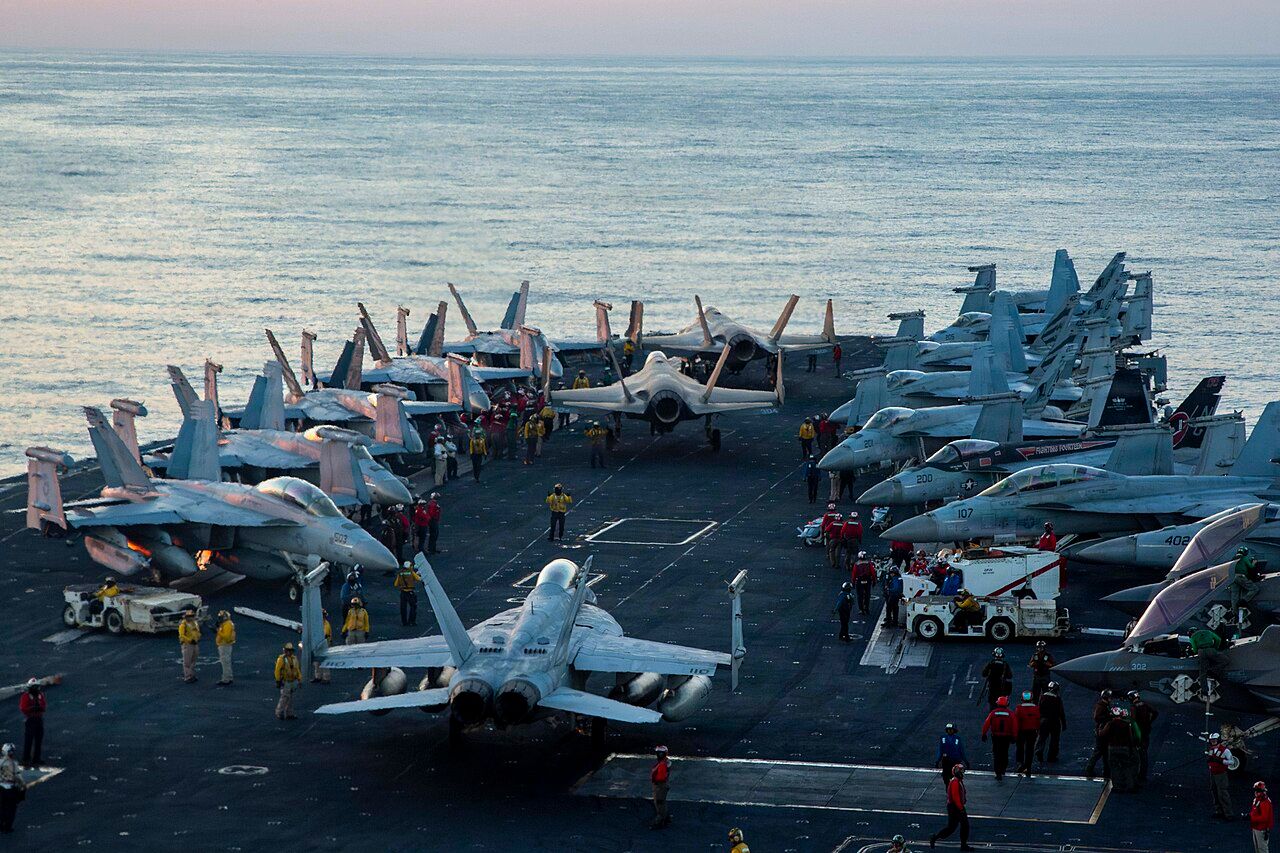
Image: Lincoln Flight Ops Support Operation Epic Fury. Credit: U.S. Navy.
In case you missed it, the U.S. is at war. Over the weekend, Israel and the U.S. launched strikes on Iran, destroying parts of the country’s defense infrastructure and even killing Supreme Leader Ali Khamenei. The strikes were initiated by Israel just a day after diplomats from the U.S. and Iran held a round of “positive” talks in their negotiations over Iran’s nuclear program.
Israel and the U.S. have dropped thousands of bombs on Iran at this point, targeting air defences, missile launchers, nuclear sites, and government buildings. The goal of the strikes, according to President Trump, is regime change – soon after the strikes, he called on Iranians to rise up against their government, telling them, “This is the moment for action. Do not let it pass.” Unfortunately for him, it looks like the president made a miscalculation, as no mass uprising has actually materialized.
According to the Human Rights Activist News Agency, a U.S.-based human rights monitor, over 700 civilians have been killed in Iran at time of writing. Those casualties include over 160 people killed in an airstrike on a girls’ school that took place on Saturday (the U.S. has denied launching the missiles that hit the school, while Israel has stayed quiet on the issue).
Iran, of course, hasn’t taken the bombardment lying down. Tehran has launched its own strikes targeting U.S. military bases across the Middle East, as well as U.S. allies in the region. Iranian missiles and drones have landed hits in Israel, Bahrain, Kuwait, the U.A.E., Qatar, Saudi Arabia, and Jordan.
At least 6 U.S. military personnel have been killed so far in the conflict, and the U.S. has already lost three F-15 fighter jets in a friendly fire incident over Kuwait. On Monday, Trump told the press that the war is expected to drag on for four to five weeks, though he noted that the U.S. is prepared “to go far longer than that.” However, it’s not clear if the Pentagon is prepared for a more drawn-out conflict with Iran – the Wall Street Journal has reported that the military is scrambling to keep a healthy supply of air-defense interceptors to defend its assets across the Middle East. Reports from South Korea indicate that the U.S. is considering moving air defense batteries out of the country, despite Korea’s status as a key U.S. ally in the Pacific region.
On Monday, U.S. Secretary of State Marco Rubio revealed why Washington decided to launch missiles at Iran less than a day after holding a meeting with diplomats from Tehran. The Secretary of State told the world that the U.S. had been dragged into the conflict by Israel. “It was abundantly clear that if Iran came under attack by anyone – the United States or Israel or anyone – they were going to respond, and respond against the United States,” Rubio said. “We knew that there was going to be an Israeli action. We knew that that would precipitate an attack against American forces, and we knew that if we didn’t pre-emptively go after them before they launched those attacks, we would suffer higher casualties.” Lawmakers on both sides of the aisle are understandably not happy that a foreign nation has dragged the country into another war in the Middle East.

France Opens Its Nuclear Umbrella
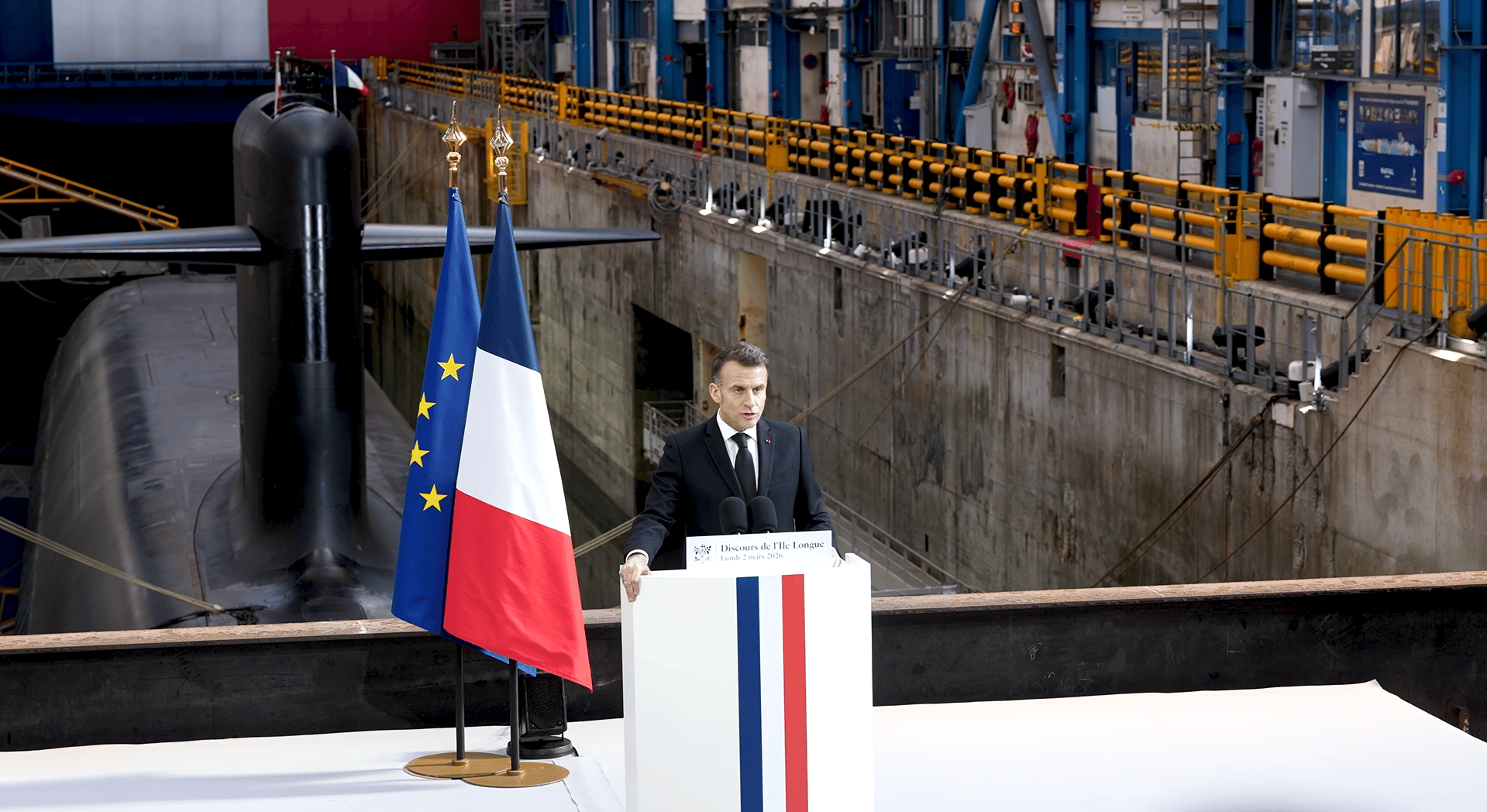
Emmanuel Macron via YouTube.
We’re headed towards a period of growing instability, as conflicts large and small continue to pop up across the globe. France has decided to cope with this new reality by beefing up its nuclear arsenal, and offering those new nukes to other European nations.
“The next 50 years will be an era of nuclear weapons,” French President Emmanuel Macron said in a speech announcing the new policy. France's nuclear plan will see the country restart production of nuclear warheads for the first time since 1992, raising the number of nukes in its arsenal from below 300 to a new, unspecified number – as part of the new strategy, France will no longer make public the number of nuclear warheads it possesses.
As it ramps up production, French jets equipped with nukes will be allowed to deploy to the U.K., Germany, Poland, the Netherlands, Belgium, Greece, Sweden, and Denmark. The development, according to Macron, will allow France’s nuclear-armed Strategic Air Forces to “spread out across the depth of the European continent... and thus complicate the calculations of our adversaries.” Alongside those two keystone points, the new nuclear plan will also see France develop a new type of nuclear submarine (The Invincible) and invest in various “auxiliary” technologies including space-based alarm systems and new air defense systems.
A Clampdown In Karachi
Soon after the U.S. announced that it had killed Iran’s Supreme Leader Ali Khamenei on Sunday, protests broke out across Pakistan (which is home to the second-largest Shi’ite Muslim community in the world after Iran). Those protests eventually saw a crowd of people storm the U.S. Consulate in Karachi, the largest city in Pakistan. Security forces opened fire on the protestors, killing at least 10 people. In other protests across the country, soldiers at U.S., U.N., and NATO bases also opened fire on demonstrators – a total of 22 people were killed across Pakistan over the weekend, and 120 others were injured.
Yesterday, Reuters reported that U.S. Marines were involved in the shooting at the consulate in Karachi. Normally, private security contractors oversee security at U.S. diplomatic missions across the globe, so Marines getting their hands dirty indicates that leaders at the consulate were seriously worried about the protest. Reuters’ sources noted that it’s not clear whether the Marines’ bullets had actually struck any of the people trying to break into the building, but it also wasn’t clear if other private security guards at the consulate had participated in the shooting at all.
Additional World News
Trump's Iran endgame unclear after mixed messaging on war aims (BBC)
Global Economy Is Facing the Prospect of Another Profound Shock (NYT, $)
China's economic ambitions hit limits to growth as its national congress meets (AP)
Middle East crisis pushes up oil prices – and could drive inflation rises too (Guardian)
At least 169 people killed in South Sudan 'surprise' attack (BBC)
Canada, India to sign multibillion-dollar trade deal (Semafor)

A Stunning Tragedy On Sixth Street
Early Sunday morning, a gunman opened fire in Austin, Texas. The attack, which is being investigated as a potential act of terrorism, took place at Buford’s Backyard Beer Garden on Austin’s Sixth Street, the center of the city’s nightlife. Two people were killed in the shooting and 14 others were wounded before police eventually shot and killed the shooter. According to Texas authorities, the gunman wore a hoodie reading “Property of Allah” and used a pistol and rifle to carry out the shooting.
The Department of Homeland Security has identified the suspect as 53-year-old Ndiaga Diagne, a man of Senegalese descent who became a naturalized U.S. citizen in 2013. Officials close to the investigation say that they found an Iranian flag and pictures of Iranian leaders while searching the suspect’s home, and the FBI is reportedly looking into a potential “nexus of terrorism” that links him back to Iran’s government.
Orange Man, Red Rash
America’s 79-year-old president was spotted with a concerning skin rash yesterday. During a Medal of Honor ceremony on Monday, photographers snapped multiple pictures of President Trump with a sizable red rash creeping up from beneath his collar – the dry, red skin appears to start lower on his neck and almost reaches his ear.
The rash is just the latest episode in a series of visible health issues for Trump. Other problems include slurred speech, persistent bruising along the back of his hands, and one bizarre moment where he appears to – for lack of a better word – shart his pants during an event in the Oval Office.
But back to the rash – the president’s personal physician told the press that the scaly skin is a side effect of a cream that Trump is using as a “preventative skin treatment,” without elaborating on what, exactly, he needs the treatment for. “President Trump is using a very common cream on the right side of his neck, which is a preventative skin treatment,” the doctor said. “The President is using the treatment for one week, and the redness is expected to last for a few weeks.”
Additional USA News
Supreme court hands Republicans win over preserving New York City voting district (Guardian)
Investigation finds ‘secretly’ added chemicals of unknown safety in US food supply (CNN)
Bill Clinton tries to distance himself from Epstein in videos released from his testimony last week (AP)
Bitter Texas Senate race forces Dems to confront racial divisions (Politico)
'One year of failure.' The Lancet slams RFK Jr.’s first year as health chief (NPR)
America’s Billionaires Continue to Flock to Wyoming (NYT, $)


The Brits Eye A Ban
The U.K. is testing out what a nationwide social media ban for children under 16 might look like. This week, a group of roughly 150 British children aged 13 to 15 became the first test subjects – a consulting group will divide them up based on how much social media they’re allowed to use and measure how those restrictions affect their sleep, moods, and physical activity levels. Some will be fully blocked from social media, others will get just one hour a day, and others will be given overnight screen curfews.
More trials are on their way as the government looks to figure out the details of a social media ban. Questions on the table include what ages should be blocked from social media usage, how age verification should be handled, which features (such as infinitely scrolling pages or autoplaying videos) are most harmful, and whether overnight social media curfews might improve kids’ sleep. Multiple child safety groups have actually advocated against blanket-banning children from using social media, stating that a ban would risk “driving teenagers into darker, unregulated corners of the internet” and that social media companies would be “let off the hook” by a ban because children would quickly find ways to dodge it.
Additional Reads
Crypto’s Richest Man Details His Secret Talks, Prison Time and Humbling Comedown (NYT, $)
Nasa announces Artemis III mission no longer aims to send humans to moon (Guardian)
In puzzling outbreak, officials look to cold beer, gross ice, and ChatGPT (Ars Technica)
Apple announces the iPhone 17E (Verge)
Iranian Ayatollah Khamenei’s Death Sparks Revolt Among Kalshi Customers (Wired, $)
Peanut For Your Thoughts
U.S. Troops Were Told Iran War Is for “Armageddon,” Return of Jesus: One commander reportedly “urged us to tell our troops that this was ‘all part of God’s divine plan’ and he specifically referenced numerous citations out of the Book of Revelation referring to Armageddon and the imminent return of Jesus Christ.”
Editor + Writer: Marcus Gee-Lim
Designer: Joe Stella