- Daily Pnut
- Posts
- The Gaza Flotilla & The Shutdown's Impacts
The Gaza Flotilla & The Shutdown's Impacts
Frozen Russian Funds & Jane Goodall Passes

Marcus Gee-Lim
October 02, 2025
In partnership with


Hi readers, happy Thursday! Today, we’re covering the Global Sumud Flotilla, the impacts of the U.S. shutdown, frozen Russian assets, youth protests in Morocco, budget cuts in NYC, and Jane Goodall.

“A letter is a soul, so faithful an echo of the speaking voice that to the sensitive it is among the richest treasures of love.” ― Honoré de Balzac

Rough Waters For The Gaza Flotilla

Credit: globalsumudflotilla.org
Yesterday, a group of over 40 vessels carrying more than 500 people – the Global Sumud Flotilla (GSF) – came within a few dozen nautical miles of Gaza. Their goal was to directly deliver humanitarian aid to the Gaza Strip, where Palestinians are struggling to survive in the face of an Israeli blockade and military offensive. Outside of the material aid, the group hopes to open a non-Israeli-controlled humanitarian corridor to Gaza and bring wider awareness of Israel’s blockade of the enclave, which has been in place since 2007.
As the boats approached the shore, several were surrounded and boarded by Israeli military personnel, who took the activists into custody. Others were strafed by drones and sprayed by water cannons, one vessel was “deliberately rammed at sea,” and multiple boats had their communications jammed. While Israel has justified its attacks on the flotilla by claiming it’s “approaching an active combat zone” and accusing the group of being funded by Hamas, the GSF described Israel’s attempts to stop the boats in international waters as “illegal” and “not an act of defence.” Turkey’s foreign ministry called the IDF attack an “act of terrorism,” and Colombian President Gustavo Petro called the interception an “international crime.”
Both Italy and Spain sent naval warships to protect the flotilla as it approached Gaza after the ships were harassed by Israel in international waters. The ships have since left the flotilla in order to avoid confrontation with Israel, but international support for the effort is still there. Italian unions called a general strike for Friday after yesterday’s events, while Colombia has revoked its free trade agreement with Israel and announced the expulsion of Israel's entire diplomatic delegation from its borders.
The Anatomy Of A Shutdown
At 12:01 a.m. on Wednesday, the U.S. government went into shutdown. Congressional Democrats and Republicans were unable to come to a compromise budget plan as GOP leaders wanted government spending to be maintained at current (but slashed) levels, while Democrats didn’t budge on their demands for expiring Obama-era healthcare subsidies to be fully funded.
What does this mean? First, hundreds of thousands of “non-essential” federal workers have been furloughed – put on leave without pay – while others are being told to continue working without pay. Services including access to some wildlife refuges, data collection and reporting, and various government inspections have also been cut. The Trump administration is also using the shutdown as an excuse to permanently fire many employees in departments that the president perceives as too left-leaning, adding to the pile of over 300,000 federal workers who’ve already been laid off this year.
Less talked about is the impact of the shutdown on the U.S. government’s credit rating. After the shutdown began yesterday, European rating agency Scope (which has given the government a less-than-stellar “AA” rating with a “negative outlook”) noted that the White House’s “increasingly unconventional policy approach has placed pressure on the long-standing checks and balances of the U.S. governance system and are seen as credit negative for the U.S. sovereign rating.” Multiple other credit rating agencies have downgraded the U.S.’s credit rating from “AAA” to “AA” over the past few years, which could force the government to take loans with higher interest rates moving forward.

A Mexican Standoff Over Russian Funds
When Russia invaded Ukraine in 2022, its central bank had $300-350 billion worth of assets invested in Western nations in the form of foreign bonds, bank deposits, and other holdings. After the war began, those funds remained frozen in their accounts, as Western nations imposed sanctions on Moscow for its invasion. E.U. countries – which currently hold about $250 billion in Russian assets – have repeatedly floated the idea of using their frozen Russian money as a way to fund Ukraine’s war effort.
On Wednesday, a day after European Commission president Ursula von der Leyen suggested using frozen Russian assets to back a $165 billion interest-free loan to Ukraine, the Kremlin threatened to retaliate for any “theft” of its frozen funds. While Moscow didn’t specify what that retaliation would look like, analysts say that Russia could similarly issue loans using European funds in Russian accounts as collateral, or possibly seize the assets of European businesses still operating in Russia. An escalation in the frozen fund faceoff, according to Russian President Vladimir Putin, could see Moscow double down on its efforts to build a financial system totally decoupled from the West.
Taking A Stand Against Stadiums
Anti-government protests in Morocco entered their fourth day on Wednesday. The “Gen Z” protests are focused on the government’s choice to spend big on infrastructure for the 2030 World Cup while letting social services fall by the wayside. While the demonstrations lack a clear leader, movement organizers wrote that “the right to health, education and a dignified life is not an empty slogan but a serious demand” in a statement released over Discord. The protests were sparked in part by the deaths of 8 women in a public hospital – “Stadiums are here, but where are the hospitals?” has become a rallying cry for demonstrators.
Protests have spread across the country over the past week, especially concentrated in areas with little government investment. Some demonstrators have clashed with police and set vehicles on fire despite calls from organizers to keep things peaceful. According to Morocco’s interior ministry, 409 people have been taken into police custody as a result of the demonstrations. The country’s parliament has promised to discuss healthcare and hospital reform in a meeting with the prime minister later today.
Additional World News
Nepal chooses a 2-year-old girl as new living goddess worshipped by both Hindus and Buddhists (AP)
Can This Japanese City Make Residents Put Down Their Smartphones? (NYT, $)
Rescuers in desperate search after a powerful earthquake hit the Philippines, killing at least 69 (AP)
Afghans rejoice as internet returns after Taliban blackout (BBC)
EU leaders back 'drone wall' to repel Russia after airspace violations (Reuters)
China launches a new visa to attract tech talent, but locals aren't happy (BBC)

Stop being the bottleneck

Every leader hits the same wall: too many priorities, not enough bandwidth. Wing clears that wall with a full-time virtual assistant who runs the drag layer so you lead, not chase.
Offload scheduling, inbox, follow-ups, vendor wrangles
Keep your stack, your process, your control
Scale scope as you scale revenue
This isn’t gig work. It’s dedicated support that shows up every day and allows founders to delegate without losing control.

A Bite Out Of The Big Apple’s Budget
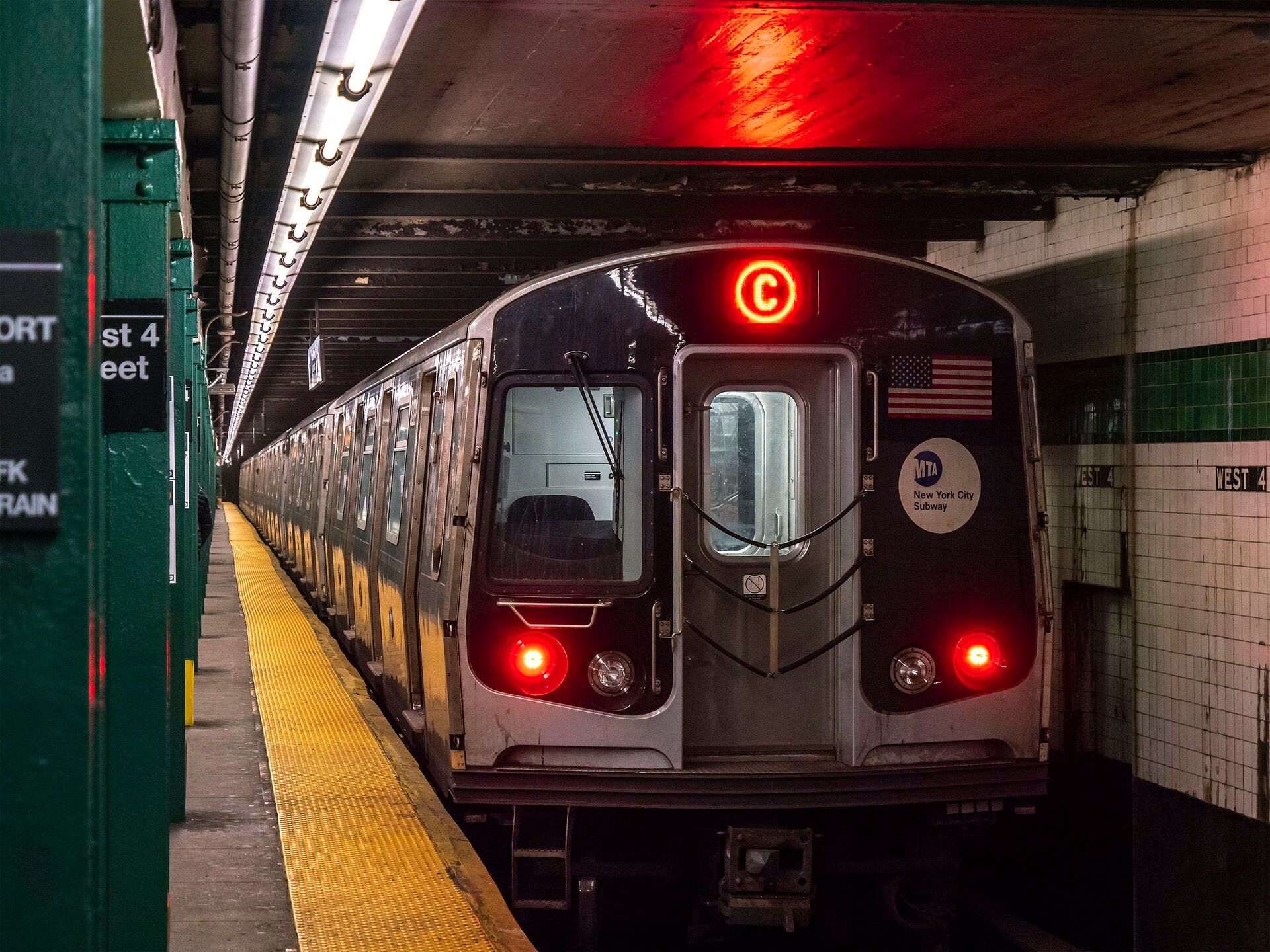
“R179 C train at West 4th Street” by GeneralPunger via Wikimedia Commons. CC BY-SA 4.0.
As part of the government shutdown that began on Wednesday, Trump fired off a series of budget cuts aimed at New York City, the home of Senate Minority Leader Senator Chuck Schumer and House Minority Leader Hakeem Jeffries. The cuts will freeze $18 billion in infrastructure funding already budgeted to the city by Congress. Russell Vought, head of the federal Office of Management and Budget, wrote that the money was “put on hold to ensure funding is not flowing based on unconstitutional DEI principles.”
The money was mainly earmarked for two massive transit projects: a rail tunnel linking New York and New Jersey under the Hudson River, as well as an extension to the New York City subway system which will bring increased service to Harlem. New York Governor Kathy Hochul, a Democrat, said the government shutdown was the fault of Republicans who “hold all the levers of power,” adding that the New York budget cuts are part of Trump’s larger “culture wars” against blue states and cities.
Cook Can Keep Cooking (For Now)
Trump’s bid to fire Federal Reserve governor Lisa Cook has, for the moment, failed. Yesterday, the Supreme Court decided not to take immediate action on a Justice Department request to allow the president to fire Cook – instead, the court will hear arguments for the case in January. This means Cook is guaranteed at least a few more months on the job, and shows that the president can’t just fire Fed governors at a moment’s notice.
While the Federal Reserve has been (on paper) a non-partisan arm of the government, Trump is looking to change that. The president wants to replace the Fed’s current board of governors – which sets interest rates nationwide – with a “majority” of policymakers who are willing to cut rates, allowing businesses to borrow money more freely. Cook, the first black woman to serve as a Fed governor, was his first target, though he’s also threatened to fire Fed chair Jerome Powell despite the fact that Trump was the one who handed Powell his job during his first term. For now, investors will likely regain some of their lost confidence in the Fed, though there’s no telling what the future holds for the bank (and the rest of the economy).
Additional USA News
Veterans react to Hegseth’s ‘insulting’ address to generals and admirals (Guardian)
TikTok investor: 'Embed the love and respect for Israel' in the US (Responsible Statecraft)
Ford and GM are buying their own EVs to keep the $7500 tax credit alive (Verge)
New York City high-rise apartment building partly collapses (Guardian)
White House views Portland protests as opening to pursue Trump’s crime crackdown (CNN)

 | Refer 20 friends, family members, or co-workers and win a free Daily Pnut Spiral Notebook where you can practice putting the news into a nutshell yourself! Spread the word by helping others become more educated and entertained, and get rewarded with some free Daily Pnut swag. |

Saying Goodnight To Goodall
Jane Goodall, one of the best-known conservationists and primatologists in the world, passed away yesterday. The Jane Goodall Institute stated that the 91 year-old died of natural causes while in California for an ongoing speaking tour. “Dr Goodall’s discoveries as an ethologist revolutionised science,” wrote the institute in a statement. “She was a tireless advocate for the protection and restoration of our natural world.”
Goodall is probably best known for her research documenting social hierarchies and the use of tools in a group of chimpanzees in Tanzania. While she received some criticism for her work, especially for naming the chimpanzees and assigning them human-like personality traits, her work inspired a younger generation to launch their own careers in zoology and primatology.
“It was after reading her books that I put on my boots and binoculars and went out in the jungle,” said one chimpanzee expert at the Max Planck Institute for Evolutionary Anthropology. The Jane Goodall Institute, which she founded in 1977, currently funds research and conservation efforts across the globe.
Additional Reads
The Age of Enshittification (New Yorker)
Colon cancer is on the rise among young people – and research points to one major culprit (Guardian)
The 25 Most Influential Magazine Covers of All Time (NYT, $)
OpenAI made a TikTok for deepfakes, and it’s getting hard to tell what’s real (Verge)
AOL's dial up internet takes its last bow, marking the end of an era (AP)
Human skin DNA fertilised to make embryo for first time (BBC)
Editor & Writer: Marcus Gee-Lim
Designer: Joe Stella