- Daily Pnut
- Posts
- The Cuban Fuel Crisis & Ghislaine Maxwell Visits Congress
The Cuban Fuel Crisis & Ghislaine Maxwell Visits Congress
The Winter Olympics & A Surprise In Thailand

Marcus Gee-Lim
February 10, 2026

Hi readers, happy Tuesday! Today we’re Ghislaine Maxwell’s Congressional appearance, a surprise election in Thailand, Cuba’s fuel crisis, Portugal’s new president, chasing oil around the world, a teachers’ strike in San Francisco, and the Winter Olympics.

“A great fire burns within me, but no one stops to warm themselves at it, and passers-by only see a wisp of smoke.” ― Vincent Van Gogh

Mum’s The Word For Maxwell
Credit: US Attorney's Office
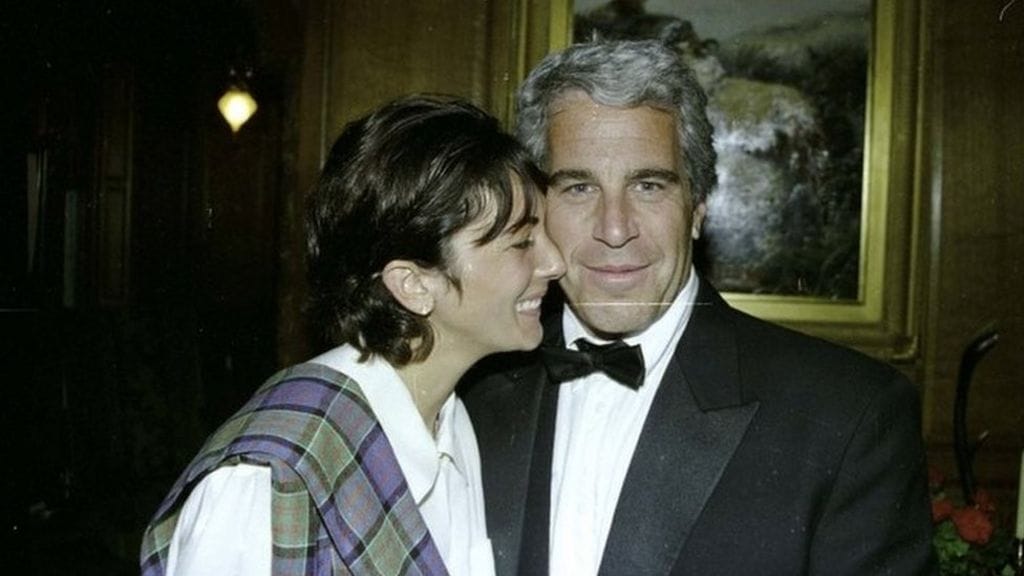
Ghislaine Maxwell, a close associate of Jeffrey Epstein (and also a convicted child sex trafficker) appeared before the House Oversight Committee in a closed-door deposition yesterday. While you might hope that some grand secret about Epstein’s sex trafficking empire was unveiled in the session, Maxwell just avoided the committee’s questions by invoking the Fifth Amendment.
“On my advice, Ghislaine Maxwell will respectfully invoke her fifth amendment right to silence and decline to answer questions today even though she would very much like to answer your questions,” her lawyer reportedly told the Oversight Committee. “Ms Maxwell is prepared to speak fully and honestly if granted clemency by President Trump. Only she can provide the complete account. Some may not like what they hear, but the truth matters,” he added. “For example, both President Trump and President Clinton are innocent of any wrongdoing. Ms Maxwell alone can explain why, and the public is entitled to that explanation.”
“After months of defying our subpoena, Ghislaine Maxwell finally appeared before the oversight committee and said nothing,” said Robert Garcia, ranking member of the committee. “She answered no questions and provided no information about the men who raped and trafficked women and girls. Who is she protecting? And we need to know why she’s been given special treatment at a low security prison by the Trump administration. We are going to end this White House cover-up.”
Bangkok’s Big Surprise
Over the weekend, Thailand held general elections to determine the makeup of its next parliament. In a massive surprise, Prime Minister Anutin Charnavirakul’s conservative Bhumjaithai party secured 194 seats in the country’s 500-seat legislature, upsetting the progressive People’s Party, which took just 116 seats. The People’s Party was widely expected to secure up to 200 seats in the lead-up to the election, but the young organization (the successor to the Move Forward party that skyrocketed into prominence in 2023) fell well short of those projections.
Analysts say there are a few factors that led to the Bhumjaithai party’s surprise victory. First, Prime Minister Anutin Charnavirakul and his organization leveraged decades of political experience to win support from local kingmakers. In Thailand’s electoral system, which grants 80% of seats based on local election results and divides the remaining 20% of seats based on the proportion of votes at a national level, that focus on local politics made all the difference. Second, the Bhumjaithai party shifted its tone, highlighting the competent leaders within its ranks while also pushing more populist policies including a consumer subsidy program. Lastly, the People’s Party has lost some of its momentum with younger voters. Its predecessor, the Move Forward Party, seized a lightning-in-a-bottle moment to outright win a general election in 2023, but the progressive organization has had its leaders banned from politics, and even just a few years in politics can make a reform movement seem less appealing to young voters.

The Cuban Fuel Crisis
“Havana City, Cuba” by Krestavilis via Wikimedia Commons
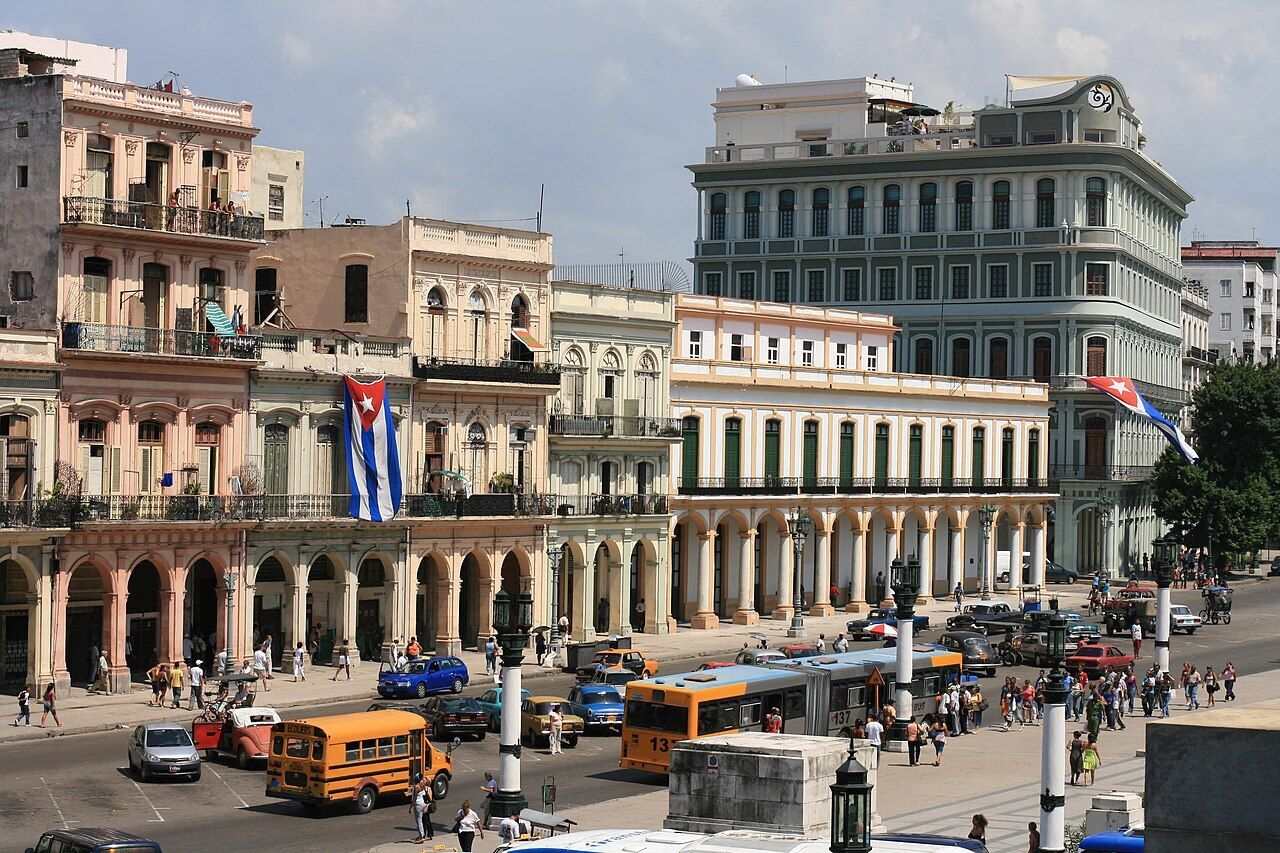
Yesterday, Cuba announced that it can no longer refuel planes that visit the island nation. The news is a result of an intensifying U.S. fuel embargo on Cuba, which has seen the country run low on oil reserves, and will likely deprive Havana of key tourism revenues.
Since it’s been under harsh U.S. sanctions since the Cold War, Cuba has heavily relied on Venezuela for fuel shipments. After the U.S. captured Venezuelan President Nicolas Maduro in early January, though, that fuel supply has dried up. Mexico briefly attempted to fill the void by sending its own crude to Cuba, but the U.S. also blocked that supply by threatening to tariff imports from any country that sends fuel to Havana.
Meanwhile, Trump has claimed that the U.S. is working out a deal with Cuban officials to end the embargo. Drop Site News, however, has reported that there are no actual negotiations going on, citing five anonymous U.S. and Cuban officials. Instead, their reporting suggests that Secretary of State Marco Rubio has been lying to Trump, telling the president that he’s been engaged in talks with Cuba without actually working on a deal. His motivation? Rubio relies on support from Florida’s sizable Cuban-American population, who are largely against normalizing U.S. ties with the country’s current Communist government.
A Left-Wing Landslide In Lisbon
Portugal held run-off presidential elections on Sunday. With 99% of the votes counted, election officials have crowned left-wing Socialist candidate António José Seguro as the nation’s next president – Seguro won in a landslide, securing 66.7% of the vote compared to the 33.3% won by hard-right populist André Ventura. Seguro ran on a relatively moderate platform, promising to work with Portugal’s center-right minority government to push the country forward.
Portugal’s government structure – it’s considered a semi-presidential republic – is a bit strange. In many European republics, the prime minister is the head of state and the presidency is a mostly ceremonial position. But in Portugal, the president acts as commander-in-chief of the armed forces, can dissolve parliament to call early elections, and can also veto legislation. This gives Seguro significant political power in a country that’s gone through three general elections in three years.
Additional World News
Ethiopia builds secret camp to train Sudan RSF fighters, sources say (Reuters)
How the Israeli President’s Visit to Australia Created a ‘Tinder Box’ (NYT, $)
Epstein revelations have toppled top figures in Europe while US fallout is more muted (AP)
Munich Security Conference: Trump’s world order hangs over Europe (BBC)
Analysis: Clean energy drove more than a third of China’s GDP growth in 2025 (Carbon Brief)
Starmer in fight to reassert control over Labour party after McSweeney exit (Guardian)

Join the 5th Military Veteran Startup Conference (MVS) on 2/11-2/12/26. MVS is the largest convening of military veteran startup and venture capital leaders. In total the last 3 conferences brought in over 1,500 founders, future founders, operators, VCs, and LPs.
MVS26 will take place in downtown San Francisco at the Marines Memorial Club on February 11-12, 2026 (Wednesday-Thursday). The Military Veteran Startup Conference is the premier event connecting military veteran founders, VCs, institutional LPs, and operators. There is no other forum that convenes this community at scale, and past conferences have driven meaningful dealmaking, partnerships, and hiring.
Thank you to our Sponsors JPMorgan, DLA Piper, Citizens Private Bank, Sightline Ventures, Holland & Knight, Cooley & PenFed Foundation

Sorry, This Oil Is Important For National Security
Yesterday, U.S. military forces boarded a Panamanian-flagged oil tanker in the middle of the Indian Ocean. The Department of Defense has claimed that the military tracked the ship – the Aquila II – for thousands of miles as it traveled from the Caribbean to the Indian Ocean. The ship, according to the Pentagon, was boarded because it was “operating in defiance of President Trump’s established quarantine of sanctioned vessels in the Caribbean.”
“It ran, and we followed,” said the department in a social media post, adding, “by land, air, or sea, our Armed Forces will find you and deliver justice.” In total, the Pentagon has seized seven vessels which it claims were violating its quarantine on Venezuelan oil. The Aquila II, though, technically hasn’t been seized yet – instead, U.S. forces are holding the vessel while the government figures out what to do with the ship. According to ship data from Monday, the vessel wasn’t holding any crude when it was boarded.
A Lesson In Negotiating
One day after the city’s Super Bowl fever wrapped up, San Francisco teachers went on strike. The walkout marks the city’s first teacher strike since 1979 – so far, it’s clear that the strike will continue into a second day, but things are far from the 1979 strike, which lasted nearly seven weeks.
Salary-wise, the United Educators of San Francisco (which represents school librarians, social workers, and nurses alongside teachers) is pushing for a 9% salary increase over two years, while the San Francisco Unified School District (SFUSD) wants a 6% increase over that same period. With inflation rates sitting at roughly 3% over the past few years, the SFUSD offering simply keeps pace with cost of living changes, while the union demand would amount to an actual pay raise.
The teachers’ union is also calling for the district to change its healthcare coverage policy – currently, SFUSD will fully cover healthcare for individual teachers, but teachers who want to have their families covered pay an average of $1,200 per month. “Some of us only ever see half of our paychecks after health care premiums are taken out. This is not acceptable or sustainable,” said one educator.
Additional USA News
The NY congressional race on the frontlines of an AI industry civil war (Politico)
Habeas Petitions Filed in Second Trump Term Hit Historic High (ProPublica)
Jamie Raskin accuses DoJ of cover-up after viewing unredacted Epstein files (Guardian)
RFK Jr misled Senate during confirmation, Congress members and Hawaii governor say (Guardian)
One of California's first labor fights over AI is playing out at Kaiser (LA Times)
Inside the Classified Whistleblower Complaint Against America's Spy Chief (After-Action Report)


Ice to Meet You, Winter Olympics
While the biggest news in sports this weekend was the Seahawks battering the Patriots in San Francisco on Sunday, the 2026 Winter Olympics kicked off just the day before. Held in and around the two Italian cities of Milan and Cortina d’Ampezzo, the winter games started with an opening ceremony held in Milan’s iconic San Siro stadium. The show’s big moment was a performance by Mariah Carey, but her act was preceded by a parade of Italian history and culture, featuring people dressed as Colosseums, moka pots, and bobbleheaded versions of great Italian artists. A few moments of controversy: U.S. Vice President JD Vance and athletes from Israel were both met with loud boos from the international crowd.
As for the actual winter sports, the Italian hosts are currently leading the medal race with 9 total medals (1 gold). Japan is in second place with 7 medals (2 gold), and Norway is in third with 6 medals (3 gold). The U.S. and China have two medals each, though the U.S. has two golds while China has a silver and bronze. One of the biggest stories from the Winter Games so far has been U.S. downhill skier Lindsey Vonn’s mid-race crash, which saw the 41-year-old airlifted off the mountain after she suffered a “complex” break to her tibia which will require multiple surgeries.
Additional Reads
AI-generated ads dropped the ball at this year’s Super Bowl (Verge)
Breaking down the symbolism in Bad Bunny's Super Bowl halftime show (AP)
Turning Point USA’s Halftime Show Was Exactly What You’d Expect (Wired, $)
IOC open to earlier dates for future Winter Olympics and Paralympics because of warmer temperatures (Yale Climate Connections)
Editor + Writer: Marcus Gee-Lim
Designer: Joe Stella