- Daily Pnut
- Posts
- Peace In Iran and Ukraine & Why The Grid Is Failing
Peace In Iran and Ukraine & Why The Grid Is Failing
The Hantavirus Outbreak & Vivek Is Back

Marcus Gee-Lim
May 07, 2026

Hi readers, happy Thursday! Today we’re covering the why North America’s electrical grid is on high alert, a possible end to the Iran war, the cruise ship hantavirus outbreak, peace in Ukraine, Trump’s new counterterrorism plan, Vivek’s triumph, and if no-phone zones actually work.

“I don't feel that it is necessary to know exactly what I am. The main interest in life and work is to become someone else that you were not in the beginning.” ― Michel Foucault

The Grid Gets A Shocking Warning

Photo by Kindel Media from Pexels.
On Monday, the North American Electric Reliability Corporation (NERC), a non-profit electric grid regulatory authority, issued an alarming warning about the state of North America’s electrical grid. The organization officially issued a Level 3 alert – the highest alert possible – for North America’s grid, and set out 7 actions that grid planners “must implement to address immediate risks posed by computational loads.” NERC added that an investigation had found that grid planners “did not have sufficient processes, procedures, or methods to address risks associated with computational loads.” Computational loads are defined as electricity demands from “artificial intelligence training, cryptocurrency mining, and traditional data center uses.”
So basically, AI, crypto, and data centers are causing massive problems for our grid. More specifically, the Level 3 alert is a response to multiple events over the past few years where large data centers unexpectedly disconnected from the grid. In broad strokes, this causes a massive amount of power demand to leave the grid – these dropoffs can destabilize the frequency of the grid, forcing generators and transformers to work extra hard to re-stabilize it, which in turn can cause blackouts for other customers.
“NERC observed customer-initiated large load reductions and significant oscillations that occur in seconds, leaving little or no room for real-time responses,” the organization said. NERC is now calling for large data centers to follow reliability standards similar to those followed by power plants, which should make the grid more reliable – at least until more stringent regulations catch up to the massive spike in power demanded by AI data centers.
Peace In The Middle East Is Pending
The U.S.-Israel-Iran war continues to leave the entire world in a state of stressed-out befuddlement. On Tuesday night, President Trump announced that he would be ending “Operation Freedom” – the U.S.’s effort to offer military escorts to cargo ships attempting to pass through the Strait of Hormuz – at the request of Pakistani negotiators, in order for both sides to negotiate a lasting end to the war.
Just before that announcement, a French cargo ship attempted to pass through the strait, thinking it was under the protection of the U.S. military. Spoiler alert: it wasn’t. The ship quickly came under fire from Iranian forces as it tried to move through Iran-controlled waters. The U.S. military and CMA CGM (which owns the container ship in question) disagreed on whether the vessel was under “Operation Freedom” protection. The U.S. claims that the ship didn't follow the proper guidelines and check-in procedures, while the shipping firm claims its voyage was conducted “in strict accordance with the required guidelines and procedures.”
Yesterday, the story changed again. Iran announced that it had received a U.S. peace proposal to fully end the war, and was reviewing it. According to Reuters, sources say that the deal doesn’t include clauses that force Tehran to end its nuclear program or reopen the Strait of Hormuz – though those points will likely be hammered out in negotiations scheduled in the one-page memo. Iran is expected to offer a response sometime today.

Haunted By Hantavirus

“2025 Hondius - IMO 9818709” by Stefan Brending. CC-BY-SA-3.0.
Since Sunday, a luxury cruise ship has been marooned off the coast of Cape Verde. The boat hasn’t broken down or anything like that – instead, its passengers have become infected with a rodent-borne pathogen called hantavirus. The disease usually begins showing symptoms roughly 2-3 weeks after exposure, and causes a wide range of symptoms including fever, muscle aches, and gastrointestinal issues. Some strains of the virus can eventually cause hantavirus cardiopulmonary syndrome, which leads to rapid fluid buildup in the lungs and has up to a 50% fatality rate depending on the strain.
Yesterday, two patients with confirmed cases of hantavirus and one suspected of infection were evacuated from the cruise ship for treatment. Three people aboard the ship have already died of the disease (one of their bodies is still on the boat), and the World Health Organization (WHO) has confirmed that it’s recorded 8 cases of the virus so far. The WHO has emphasized that the risk of this outbreak spreading is low, as the disease can only spread person-to-person when there’s very close contact between humans.
A (Temporary) Peace In Ukraine
There will be peace in Ukraine soon, at least for a little while. Earlier this week, Russia’s Defense Ministry announced that it would be implementing a unilateral ceasefire on Friday and Saturday as the country celebrates Victory Day (which celebrates the Soviet Union’s victory over Nazi Germany in 1945). Ukraine has stated that it will also implement a ceasefire, though its truce began yesterday and will continue until Russia takes any military action.
Of course, neither side left it at that. Russia’s Defense Ministry noted that if Ukraine decides to interrupt the Victory Day parade with a drone strike, it would respond with a “massive missile strike on the center of Kyiv.” Ukrainian President Volodymyr Zelenskyy replied by pushing Moscow “to take real steps to end their war, especially since Russia’s Defense Ministry believes it cannot hold a parade in Moscow without Ukraine’s goodwill.” According to the AP, Russia’s parade this year will feature no military equipment for the first time in almost two decades – which might be a bad sign for Moscow’s war efforts.
Additional World News
Rubio to meet Pope Leo as Trump keeps up attacks on pontiff (Reuters)
Russia is ramping up its attempts to kill opponents in Europe, intelligence officials say (AP)
Stocks climb, oil prices fall on US-Iran deal hopes (Semafor)
Skeletons in their clothing: Recovering bodies from the rubble in Gaza (NPR)
Israeli suspects charged with bribery after suspicious bets placed on Iran strikes (Guardian)
The Lessons of the Long Confucian Peace: Can Ideology Prevent War in East Asia? (Foreign Affairs, $)

Protection for Birds, a Gift for You
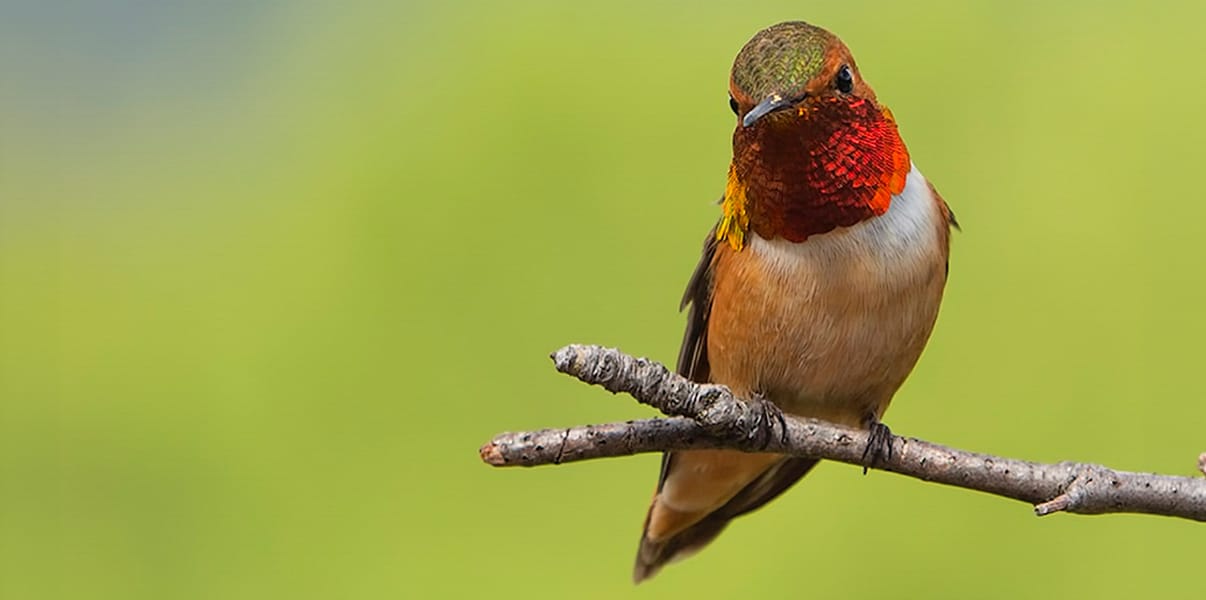
Rufous Hummingbird. Photo: Walter Nussbaumer/Audubon Photography Awards
The National Audubon Society protects birds and the places they need, thanks to generous supporters.
Start an annual gift today to help create a brighter future for the birds you love. As our thanks, we’ll send you our quarterly, award-winning magazine.

The “Enemy” Within?
Yesterday, the president signed off on a new national counterterrorism strategy, which outlines what the Trump White House views as the biggest threats to American security. According to the document, the three biggest threats to the U.S. are “Narcoterrorists and Transnational Gangs; Legacy Islamist Terrorists; and Violent Left-Wing Extremists, including Anarchists and Anti-Fascists.” The plan seems to include continuing strikes on alleged “cartel boats” moving through international waters near the U.S., and increased missile strikes on Islamist groups in the Middle East.
The White House is also moving to increase surveillance of Americans. “In addition to cartels and Islamist terror groups, our national CT [counterterrorism] activities will also prioritize the rapid identification and neutralization of violent secular political groups whose ideology is anti-American, radically pro-transgender, and anarchist,” the plan reads, adding that the U.S. will use “all the tools constitutionally available to us to map them at home.”
In another security document, the White House has linked “anti-fascism” to “anti-Americanism, anti-capitalism, and anti-Christianity,” as well as “extremism on migration, race, and gender; and hostility towards those who hold traditional American views on family, religion, and morality.” Basically, if the White House thinks you have “extreme” views, you could soon find yourself under increased scrutiny under this new counterterrorism plan.
Ramaswamy’s Revenge
In January 2024, billionaire Vivek Ramaswamy came in 4th during the Iowa Republican presidential caucuses, securing under 8% of the vote (behind Donald Trump, Ron DeSantis, and even Nikki Haley). After that, he dropped out of the Republican presidential primary, endorsed Trump, and went on to work at DOGE for 69 days before being fired by Elon Musk. Now, Ramaswamy is back in the driver’s seat – on Tuesday night, he won the Republican nomination for this year’s Ohio governor race. He’s set to face off against Democratic candidate Amy Acton in November’s midterm elections.
“I know Vivek well, competed against him, and he is something SPECIAL,” Trump wrote in his endorsement of Ramaswamy. “He is Young, Strong, and Smart!” Ramaswamy isn’t the only Trump-endorsed candidate to win recently – five state senators in Indiana lost to Trump-backed challengers on Tuesday. The defeated incumbents had all voted against the president’s redistricting plan for the state’s House voting districts.
Additional USA News
Uncertainty looms as last oil tanker from Middle East arrives in California (Guardian)
Republicans want to add $1 billion for Trump's ballroom security to ICE funding plan (NPR)
Rutgers cancels graduation speech over speaker’s pro-Palestinian posts (Guardian)
CNN founder Ted Turner, a pioneer of cable TV news, dies at 87 (CNN)
Tennessee poised to vote on new US House map sought by Trump that carves up Memphis (AP)


Do No-Phone Zones Actually Work?
Recently, governments across the world have been trying out different rules and regulations aimed at keeping kids safe on social media. Some have tried age-restricting access to platforms like TikTok and Instagram, while others have at least tried to keep kids off their phones at school.
In a recent study, researchers examined the outcomes of “no-phone” policies at over 1,800 schools across the U.S. Generally, these policies involve students handing over their phones to school authorities during the day; they’re given the phones back as the school day ends. While you might think that this would help students focus on class, the study found that no-phone policies had “close to zero” impact on student learning outcomes, and had zero effect on attendance or online bullying. The study also found that the policies actually correlated with an increase in suspensions and students reporting lower well-being in the year after a phone ban was implemented (though these effects disappeared in later years).
Does this mean that schools should just give kids their phones back? No, says one of the study’s authors. “One of the concerns I have about this study is that it might encourage people to walk away from phone bans as a compelling reform. And I think that would be a major mistake,” he said. “There are some encouraging results in the midst of these mixed findings. They are driving down phone usage, and as schools have longer experiences with phone bans, we’re seeing a shift towards more positive outcomes.”
Additional Reads
‘I’d Wake Up in the Night and Bet $7,000 on Korean Baseball’ (NYMag)
Christian content creators are outsourcing AI slop to gig workers on Fiverr (Verge)
These companies help parents try to pick their babies' traits. Experts are wary (NPR)
Massive Alaska megatsunami was second largest ever recorded (BBC)
Single dose of magic mushroom psychedelic can cause anatomical brain changes, study finds (Guardian)
Peanut For Your Thoughts
I guess I just like learning about power infrastructure or something…
Editor + Writer: Marcus Gee-Lim
Designer: Joe Stella