- Daily Pnut
- Posts
- A Peace Deal In Gaza & Why Gold Is Back
A Peace Deal In Gaza & Why Gold Is Back
ICE In Chicago & The Palisades Fire Starter

Marcus Gee-Lim
October 09, 2025

Hello, readers – happy Thursday! Today, we’re covering gold’s big moment, a peace deal in Gaza, Germany’s recession risk, more Caribbean boat strikes, ICE in Chicago, the Palisades fire starter, and more Nobel Prizes.

“Accept the children the way we accept trees — with gratitude, because they are a blessing — but do not have expectations or desires. You don’t expect trees to change, you love them as they are.” ― Isabel Allende

The Delicate Deal Of The Decade
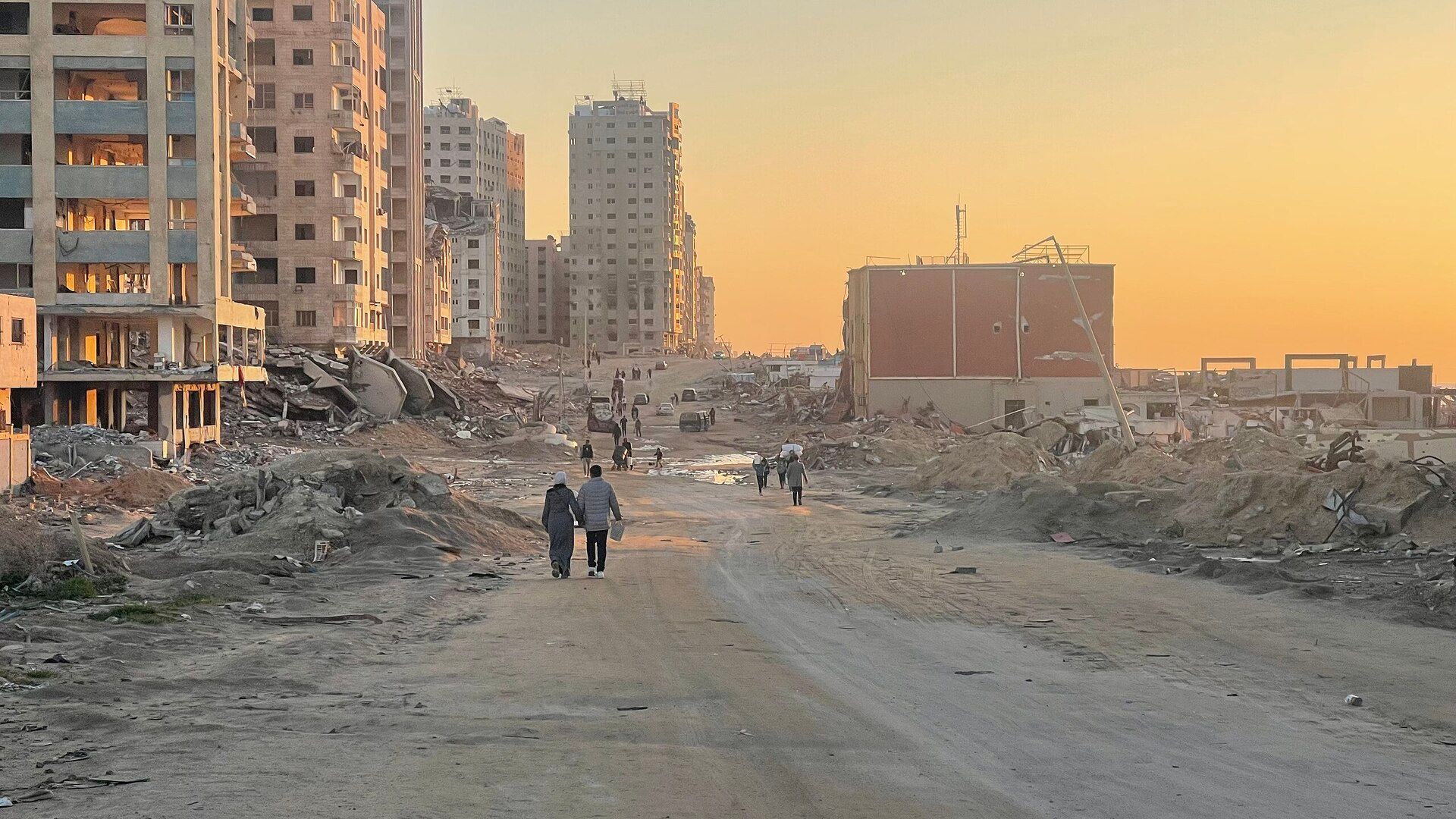
(Photo by Jaber Badwen via Wikimedia Commons)
We have a deal. Late yesterday, Israel, Hamas, and the U.S. announced that they’d finally agreed to a hostage release deal which – if it holds – should bring about the beginning of the end of the war in Gaza. According to the terms of the agreement, Hamas will release all 48 of its Israeli hostages (dead and alive), and Israel will begin its plans to withdraw from Gaza.
“I am very proud to announce that Israel and Hamas have both signed off on the first Phase of our Peace Plan,” Trump wrote on Truth Social last night. “This means that ALL of the Hostages will be released very soon, and Israel will withdraw their Troops to an agreed upon line as the first steps toward a Strong, Durable, and Everlasting Peace.” The deal still needs to be approved by Israel’s government – Prime Minister Benjamin Netanyahu is expected to hand over the plan to Israeli lawmakers this morning.
“Thank God for the ceasefire, the end of bloodshed and killing,” said one Palestinian living in Khan Younis. “I am not the only one happy, all of the Gaza Strip is happy, all the Arab people, all of the world is happy with the ceasefire and the end of bloodshed.” In Israel, the Hostages Families Forum (which represents the families of the Israeli hostages) said it received news of the deal with “excitement, anticipation and apprehension.” That apprehension is probably felt by most diplomats in the world, as Hamas and Israeli negotiators still have many details to iron out before the conflict can actually end. The hostages are currently expected to be handed over next Monday.
The Gold Standard At The End Of The Rainbow
While AI stocks have been making headlines over the past year for pushing the U.S. stock market to record highs, another low-tech investment has been quietly gathering momentum. Yesterday, the value of a single ounce of gold reached $4,000 for the first time ever, and prices for the precious metal have gone up 50% over the past year.
Why does it matter that the price of some yellow metal has reached an all-time high? Basically, it highlights just how anxious investors are about the state of the economy. People buy gold when they’re worried about other assets losing value, and investors are increasingly sounding the alarm about the U.S.’s economic health despite AI growth holding up the stock market. A few signs: the Federal Reserve has repeatedly voiced its concerns about inflation, the U.S. dollar lost 10% of its value in the first half of the year, and private employers laid off 35,000 more people than they hired in August and September. Combined with all the tariff uncertainty from earlier this year – plus the current government shutdown – you can’t blame people for being worried about a sudden economic downturn.
Last week, the UCLA Anderson Forecast predicted that the U.S. economy could slide into a “stagflation-lite” scenario, where unemployment and inflation both rise together. Normally, unemployment and inflation are inversely related, meaning when one goes up the other goes down. The economic levers that a government pulls when it wants to lower the unemployment rate can often lead to higher inflation (and vice versa), meaning both rising at the same time is a hard situation to fix. Most famously, the Federal Reserve was only able to dig the U.S. out of the 1970s stagflation crisis by raising interest rates to a whopping 20% and allowing two recessions to run their course before the economy eventually recovered.

Das Ist Not A Good Sign
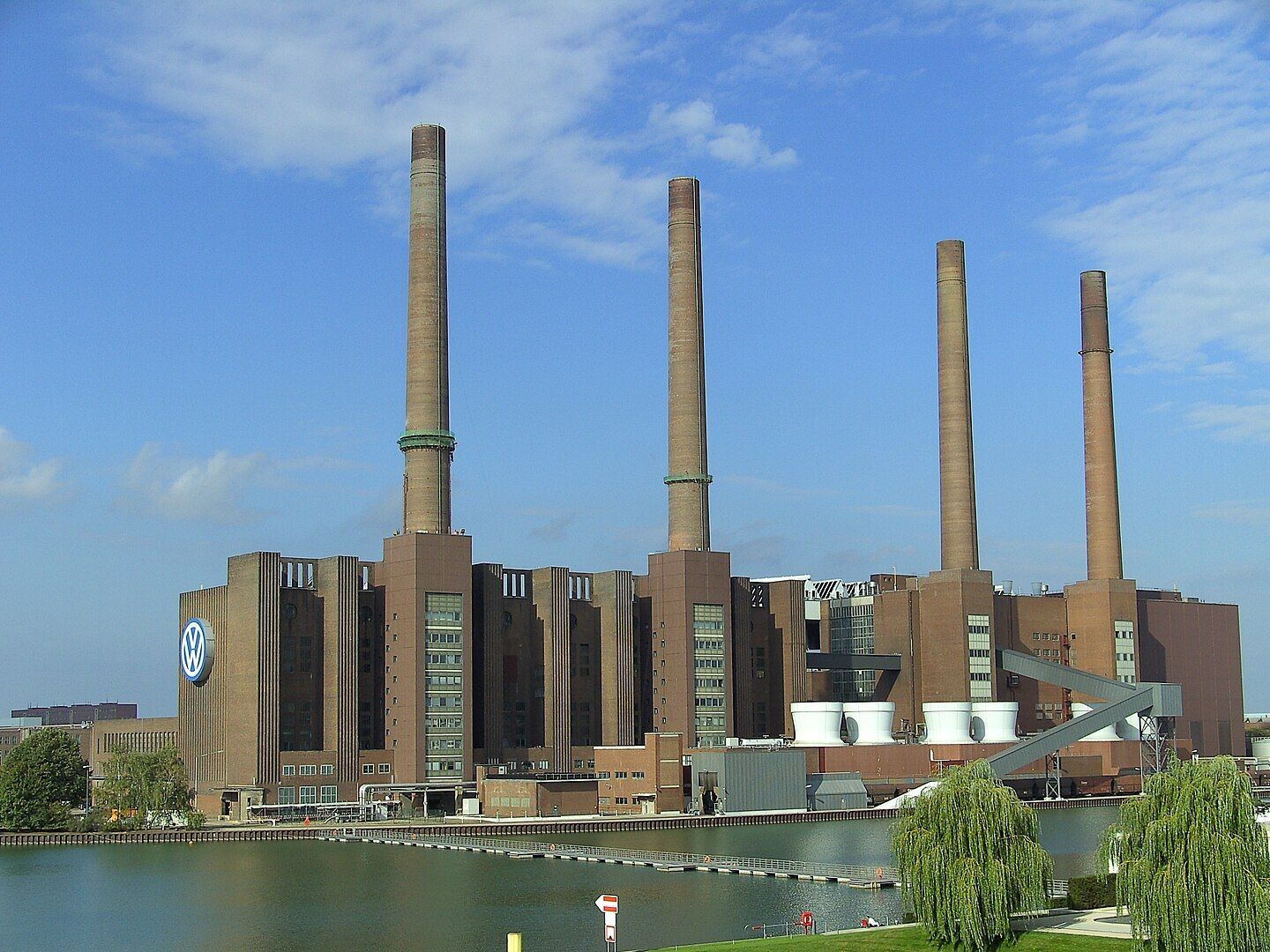
(Photo by High Contrast via Wikimedia Commons. CC BY 2.0 DE.)
Things aren’t looking great in the U.S., but Germany isn’t doing so well either. Yesterday, the country’s federal statistics office released industrial output data for August. The numbers show that German industrial output decreased by 4.3% compared to July – that number marks the largest output drop since Russia began its invasion of Ukraine, and is well above the 1% dip predicted by analysts. The biggest pain point was in the auto industry, which saw its output shrink by 18.5% thanks to holidays and a lack of demand from the U.S.
Germany’s economy was given a nice jolt earlier this year as U.S. importers bought up a wide range of goods in anticipation of Trump’s tariffs taking hold. Now, that boost is showing signs of slowing down, and the economy is crashing back down to earth. “Today's figures are a further indication that the German economy hardly grew at all in the third quarter,” said one economist. The country’s economy shrunk 0.3% in the second quarter of this year, and analysts are raising concerns about it slipping into a recession if the shrinkage continues.
Making A Splash, In A Bad Way
On Saturday, the U.S. bombed yet another boat in international waters. The strike marked the fourth such attack over the past couple weeks, and killed four people. While the White House claimed that the victims were using the boat to run drugs into the U.S., Washington has offered exactly zero evidence backing up their claims.
Yesterday, Colombian President Gustavo Petro announced that the vessel might have been a Colombian boat with Colombian citizens aboard. “Indications show that the last boat bombed was Colombian with Colombian citizens inside of it,” Petro tweeted. “The aggression is against all of Latin America and the Caribbean.” He asked the families of the victims to come forward with more supplementary details about the incident, but didn’t respond to media requests for more evidence to back up his claims. “Let the White House give us the information about the people who died due to the U.S. missiles, so we can see if my information is unfounded,” he added in a later statement.
More Mixed Nuts
The Argentine peso, and Javier Milei, are in trouble (Economist)
France Holds Its Breath Over Last-Ditch Talks for a Government Deal (NYT, $)
United Nations to cut 25% of its global peacekeeping force in response to US funding strains (AP)
How Nepal’s Gen Z Revolution Spiraled Out of Control (NYT, $)
Bank of England warns of growing risk that AI bubble could burst (Guardian)

Things Get ICE-y In The Windy City
Yesterday, Trump called for Brandon Johnson, the mayor of Chicago, and JB Pritzker, the governor of Illinois, to be thrown into jail. Their crimes? Allegedly failing to adequately protect U.S. Immigration and Customs Enforcement (ICE) officers. “Chicago Mayor should be in jail for failing to protect Ice Officers!” he wrote on Truth Social. “Governor Pritzker also!”
He made the post soon after 500 National Guard troops were deployed near Chicago yesterday – their mission is to “protect” ICE agents from protestors. “This is not the first time Trump has tried to have a Black man unjustly arrested,” Mayor Johnson said in a response to Trump. Governor Pritzker also issued his own response, saying, “I will not back down. Trump is now calling for the arrest of elected representatives checking his power. What else is left on the path to full-blown authoritarianism?” He also accused Trump of using the Guard troops as “political props” and “pawns,” saying their deployment was being used to “justify and normalize the presence of armed soldiers under his direct command.”
This Guy Started The Fire
We wouldn’t blame you for forgetting that this year kicked off with two massive fires in Southern California, which together destroyed over 18,000 homes and forced hundreds of thousands of people to evacuate. Nine months later, federal officials charged a 29-year-old man with starting the Palisades Fire, the larger of the two blazes. The man – Jonathan Rinderknecht – was arrested in Florida on Tuesday, and was hit with multiple charges, including malicious destruction by means of a fire, in court on Wednesday.
According to the officials, Rinderknecht started a small fire (likely using a barbecue lighter) in the wealthy Pacific Palisades area on New Year’s Day after dropping off an Uber passenger in the area. They claim that he called 911 soon after watching the blaze take hold, but fled soon after. “He left as soon as he saw the fire trucks were headed to the location. He turned around and went back up there. And he took some video and, and watched them fight the fire,” said acting U.S. Attorney Bill Essayli.
While firefighters put the blaze out within the same day, officials said the fire continued to burn in underground root systems for the next week before bursting into a larger fire which spread quickly on January 7. Underground fires like those can linger for weeks and escape thermal imaging cameras due to being buried under 15 to 20 feet of dirt.
More Nuts In America
Ex-FBI director James Comey pleads not guilty on lying to Congress charge (Guardian)
How Much It Costs to Drive an E.V. and a Gas Car in Every State (NYT, $)
Alabama sheriff condemned over ‘racist’ Halloween display at home (Guardian)
Carney and Trump discussed Keystone XL pipeline revival, sources say (BBC)
RFK Jr.'s new dietary guidelines could be controversial. Here's what to watch for (NPR)
Who Can Lead the Democrats? (New Yorker, $)

 | Refer 20 friends, family members, or co-workers and win a free Daily Pnut Spiral Notebook where you can practice putting the news into a nutshell yourself! Spread the word by helping others become more educated and entertained, and get rewarded with some free Daily Pnut swag. |

A Pair More Of Prize Picks
Nobel Prize season continues on! On Tuesday, the Nobel Prize in physics was awarded to a trio of American physicists. John Clarke, Michel H. Devoret, and John M. Martinis each received a medal, diploma, and $390,000 for their research that made two properties of quantum mechanics (quantum mechanical tunnelling and quantised energy levels) visible to the human eye. Their experiments, conducted in 1984 and 1985, “provided opportunities for developing the next generation of quantum technology,” according to the Nobel Prize committee.
Yesterday saw the Nobel Prize in chemistry handed to Richard Robson, Susumu Kitagawa, and Omar M. Yaghi. The trio all worked on metal-organic frameworks, a type of molecular structure that combines metals and organic molecules – the frameworks can be scaled up to build solid metal structures which are porous to gases and other molecules. While the chemists didn’t conduct their research side-by-side, Drs. Kitagawa and Yaghi made significant contributions to the field created by Dr. Robson’s initial breakthrough in creating rudimentary metal-organic frameworks. “Metal–organic frameworks have enormous potential, bringing previously unforeseen opportunities for custom-made materials with new functions,” said the chair of the chemistry Nobel Prize committee.
More Loose Nuts
Animal abusers are getting let off the hook now more than ever (Vox)
Recruiters Use A.I. to Scan Résumés. Applicants Are Trying to Trick It. (NYT, $)
Dozens of Bob Ross paintings will be auctioned to help public TV after funding cuts (NPR)
Scientist Who Was Offline 'Living His Best Life' Stunned by Nobel Prize Win (Wired, $)
A man in China lived more than 170 days after transplant with pig liver, doctors report (CNN)
Editor & Writer: Marcus Gee-Lim
Designer: Joe Stella